Monday, January 23, 2006

I'm A (Time) Travelin' Man

Most of the superheroes in the DC universe had some method or other of traveling through time. Batman had Professor Nichols, who initially appeared to project him and Robin into the past via hypnosis, a preposterous notion that DC covered up for years by throwing more and more scientific-looking instruments into the room.

Flash had his Cosmic Treadmill, a definite forerunner of the exercise machine gathering dust in many basements across America. The Atom had the Time Pool. Superman could just fly in a tight circle for awhile and he'd automatically go forwards and backwards in time.

For awhile DC even standardized the look of a time machine for their characters who had no other way to travel through the ages:


The basic glass sphere would remain constant for most of the Silver Age. Many of the machines had skids, like a helicopter, or else a tripod arrangement for stability when on the ground.

The crucial element of time travel that DC established first appeared in a Superboy story, The Impossible Mission, in Superboy #85. Superboy decided to travel back in time to save President Lincoln from John Wilkes Booth's bullet. But when he got back there, he encountered the adult Luthor, who had also traveled backwards in time for some plot. Luthor, thinking Superboy was onto his schemes, managed to paralyze Superboy with a piece of red Kryptonite. When the commotion arises at the Ford Theatre, across from Luthor's hotel room, Lex realizes he has helped to kill the greatest President the country ever had. Surprisingly he seems genuinely upset and guilt-ridden. But the lesson that Superboy takes from this escapade is that you cannot go back in time and change history. And for the most part, DC stuck with that rule for the rest of the Silver Age.

Friday, January 20, 2006

Secret Agent Man

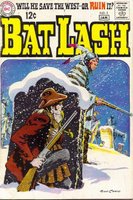
Comic publishers have always dutifully scanned popular culture for clues as to topics that appear to interest teenagers. In the 1950s, comics were produced to capitalize on the appeal of Westerns at the movie theatre. When monster movies were popular, monster comics were not behind. And when spies and secret agents became hip in the mid-1960s, the publishers rushed to fill the demand.

Marvel made a particulary strong entry into the secret agent genre with the paranoia-tinged Nick Fury, Agent of Shield series. NFAS took over the lead feature in Strange Tales that had previously belonged to the Human Torch (and briefly, Torch and the Thing team-ups) effective with issue #135, featuring a terrific cover by Jack Kirby:


(Note: Fred Hembeck has a cool takeoff on this cover and some memories of the NFAS Saga in the January 17, 2006 edition of his blog.)

Fury had been a character in the Marvel universe for several years already, albeit as a historical character. He was Sgt. Fury, leader of the Howling Commandos, a World War II fighting squadron. Now Marvel decided to age him a few years (but not quite the 20 that the calendar called for) and make him a secret agent.

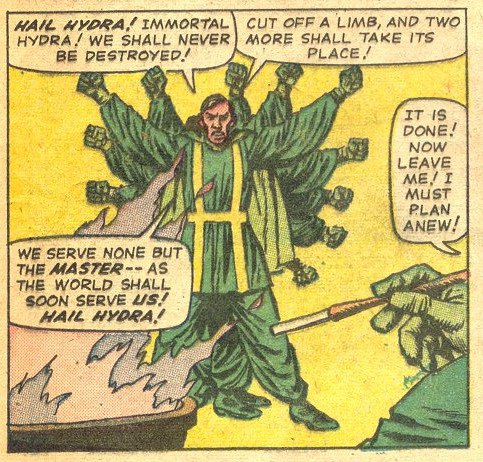
S.H.I.E.L.D. of course was a direct swipe of U.N.C.L.E. (which was probably a swipe itself of S.P.E.C.T.R.E.) and stood for Supreme Headquarters International Espionage Law-Enforcement Division. Shield's chief enemy was a group called Hydra, which mercifully does not stand for anything, but does have some cool rituals:


NFAS was blessed with great stories and artwork. After handling the introductory story in Strange Tales #135, Jack Kirby did layouts for the amazing Johnny Severin for the next few issues, followed by a year or so of rotating artists including Ogden Whitney (!). Finally in Strange Tales #151, a new artist was hired for the feature who would define Agent of Shield for the next few years: Jim Steranko. Steranko's style was unlike most comics artists of the time; he was heavily influenced by the psychedelic posters and album art of the late 1960s as this cover shows:


In early 1968, Marvel decided to quit doing anthology magazines. Strange Tales was changed to Dr Strange with issue #169, and Nick Fury Agent of Shield was given its own title starting with #1. Unfortunately the title struggled a bit on its own apparently, possibly because of the inevitable decline of the secret agent genre after the initial fad died down. The first twelve issues of NFAS were published on a monthly basis, but with #13, the frequency was changed to bi-monthly and the title only lasted to #15. A year later Marvel published three more issues but they were reprints of the early Strange Tales stories.

Monday, January 16, 2006

Early "Relevant" Comics

Although the more famous "relevant" comics came at the end of the Silver Age, there were several earlier attempts. Here's an amusing story from Superman #114, July 1957:


Not even Superman can avoid the taxman! In the story, Superman owes a billion dollars to the government, and must pay up by the next day. But every time he tries getting something valuable he finds a better use for it than paying the debt--hospitals need the radium he digs out of the ground, for example. In the end, a compromise is reached.

This is only one of several Silver Age stories I can think of that featured the emerging snares of the postwar era. For example, in Batman #91, the Caped Crusader had to deal with "Batman's Publicity Agent", an overagressive promoter. In the following issue, "The Fan Mail of Danger", Batman is forced to hire a secretary when his fanmail starts to pile up. There was also a story about Superman at some point where he had to purchase life insurance, and as a result the insurance company begins bugging him not to engage in so many risky events.

Saturday, January 14, 2006

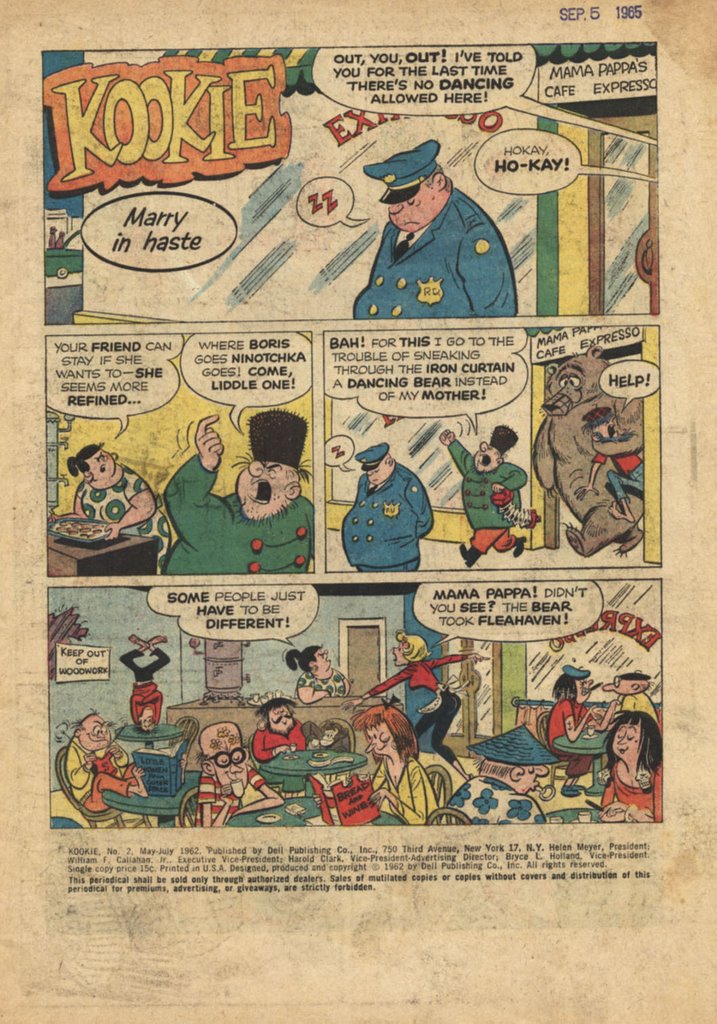
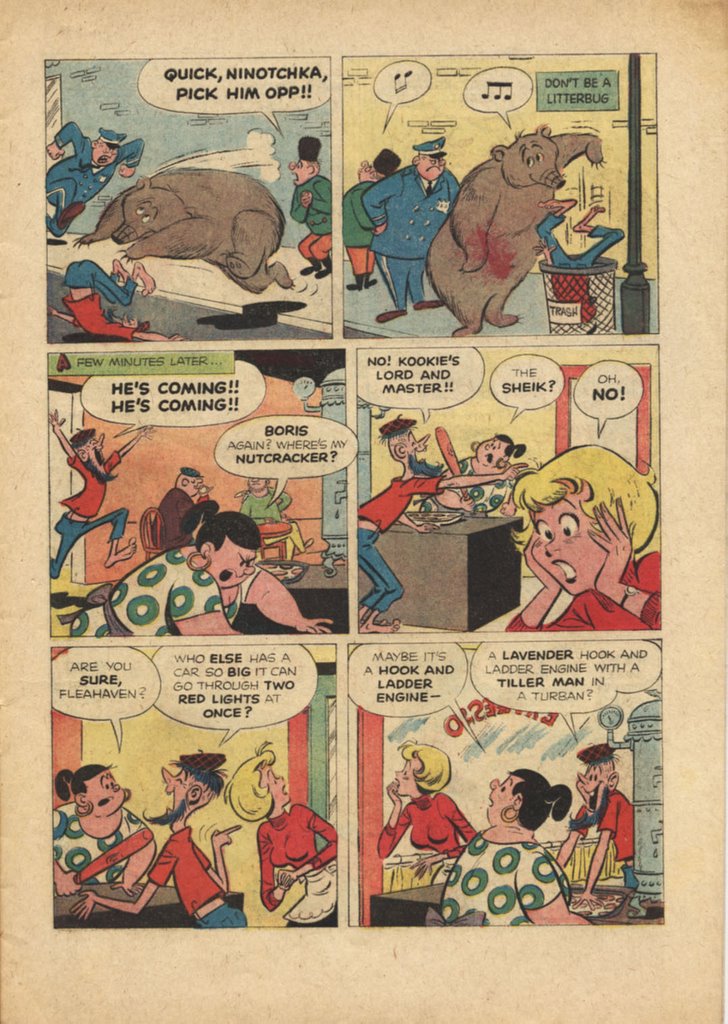
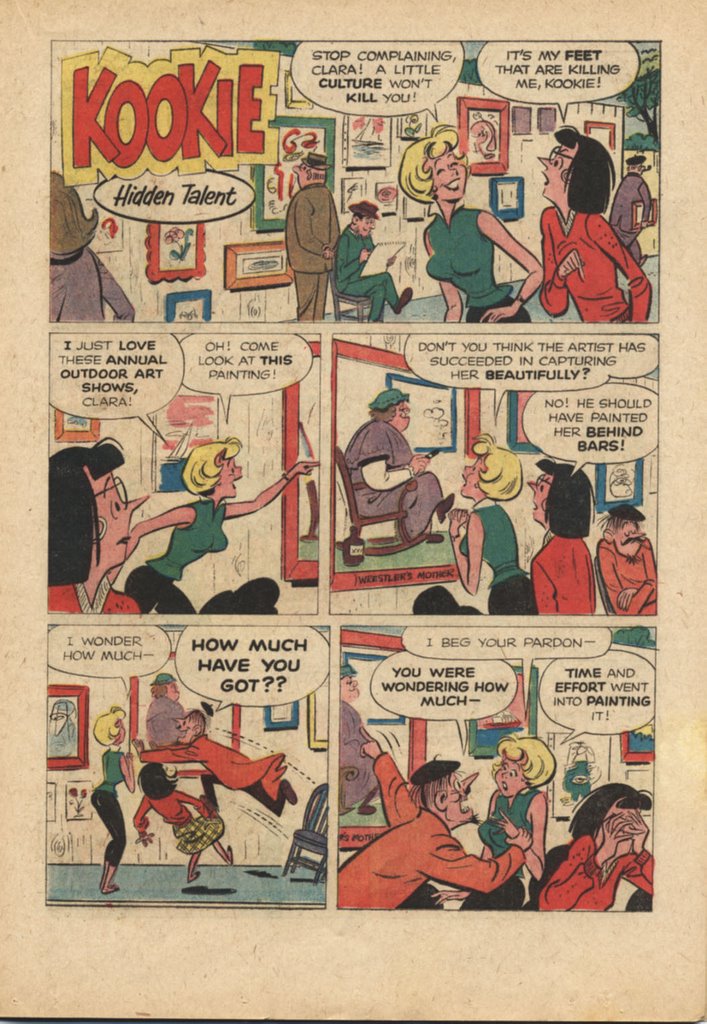
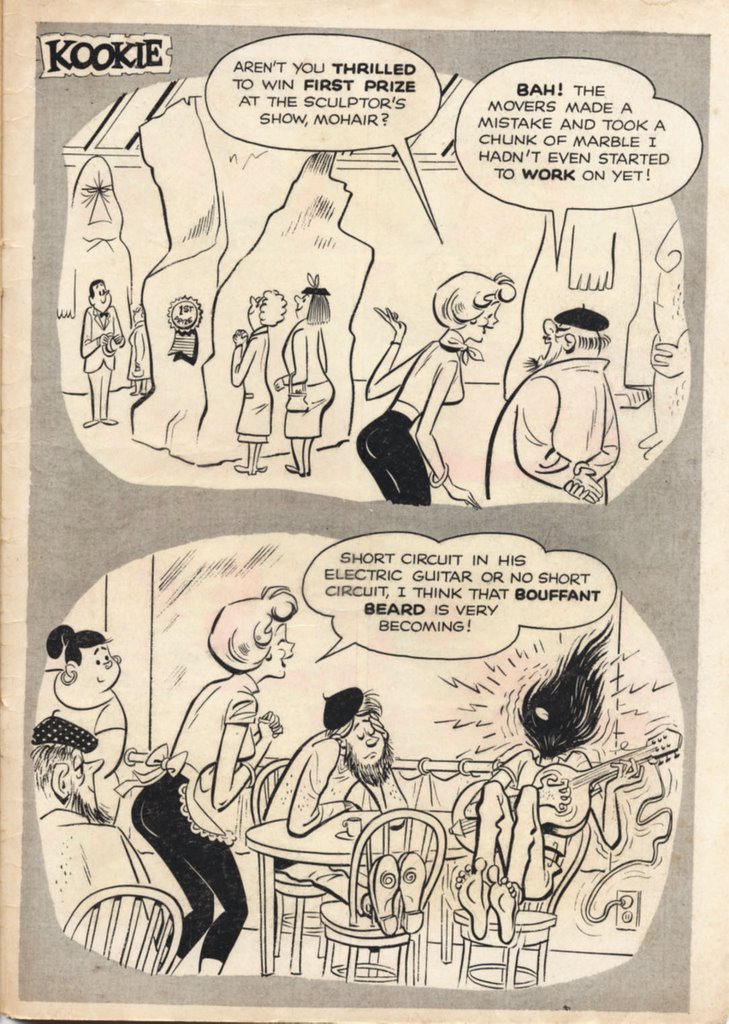
Kookie #2 Part 1--As Requested by Fred Hembeck

(Welcome fellow Fred Hembeck fans!)

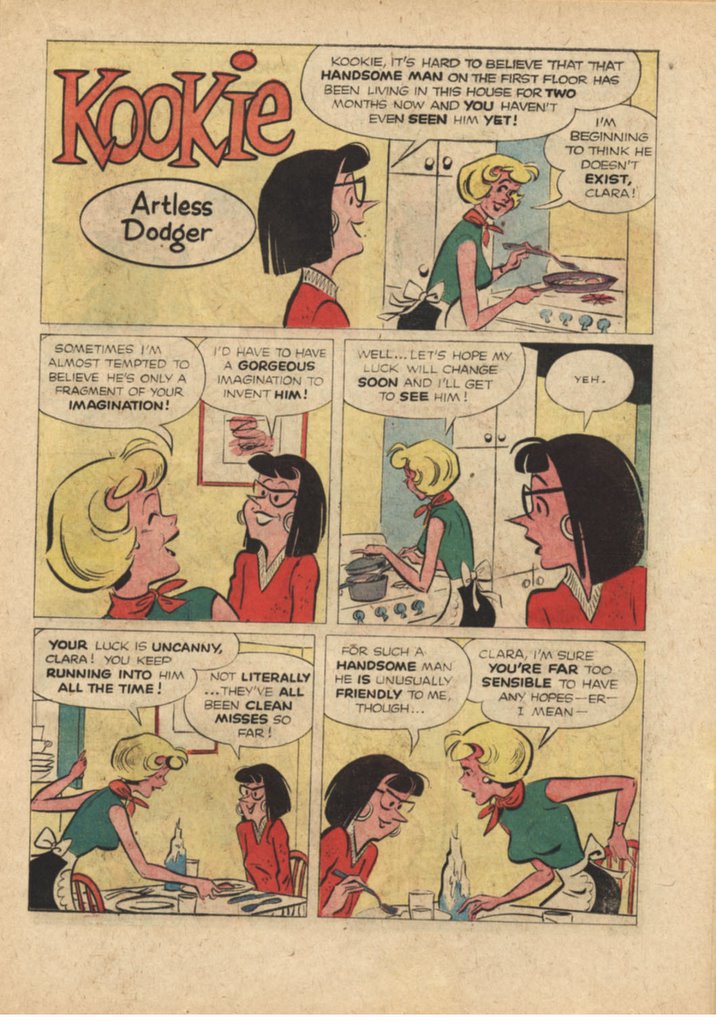
Fred Hembeck wrote eloquently about his appreciation for Kookie #1, an early 1960s good girl comic with a twist; the girl worked in Greenwich Village, at an espresso bar frequented by beatniks. You can read this terrific comic online here.

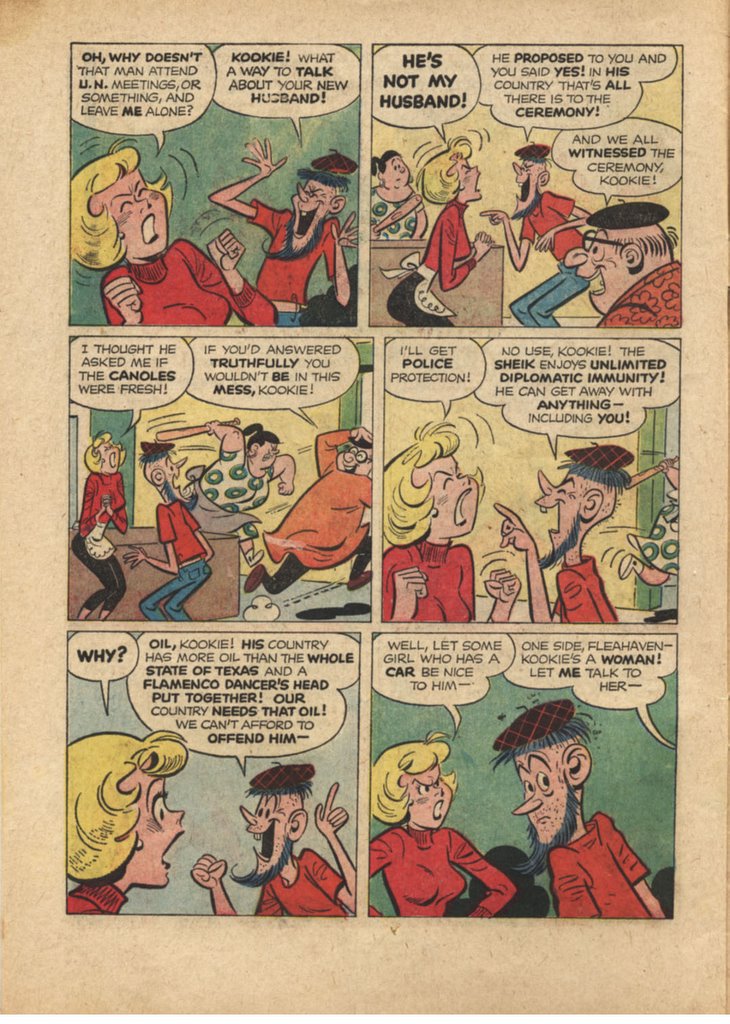
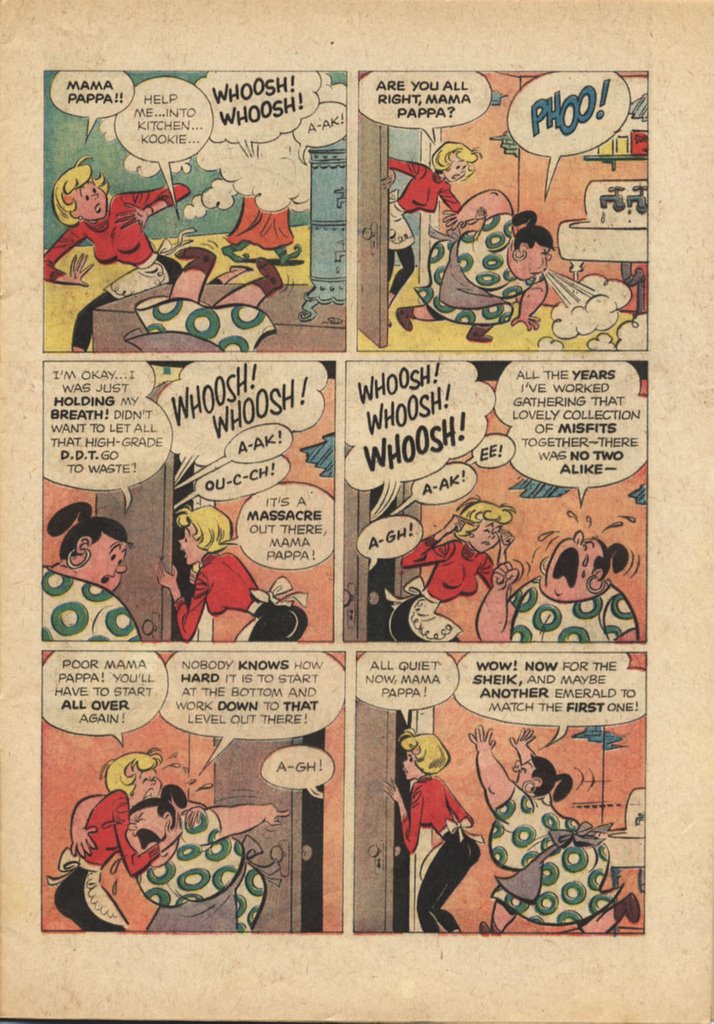
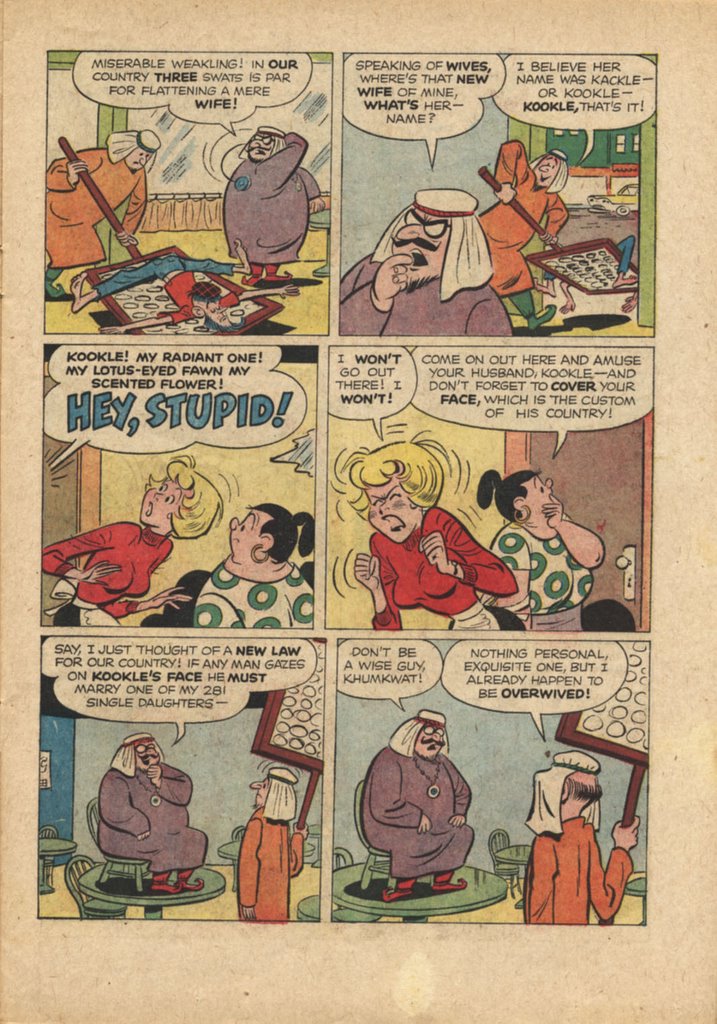
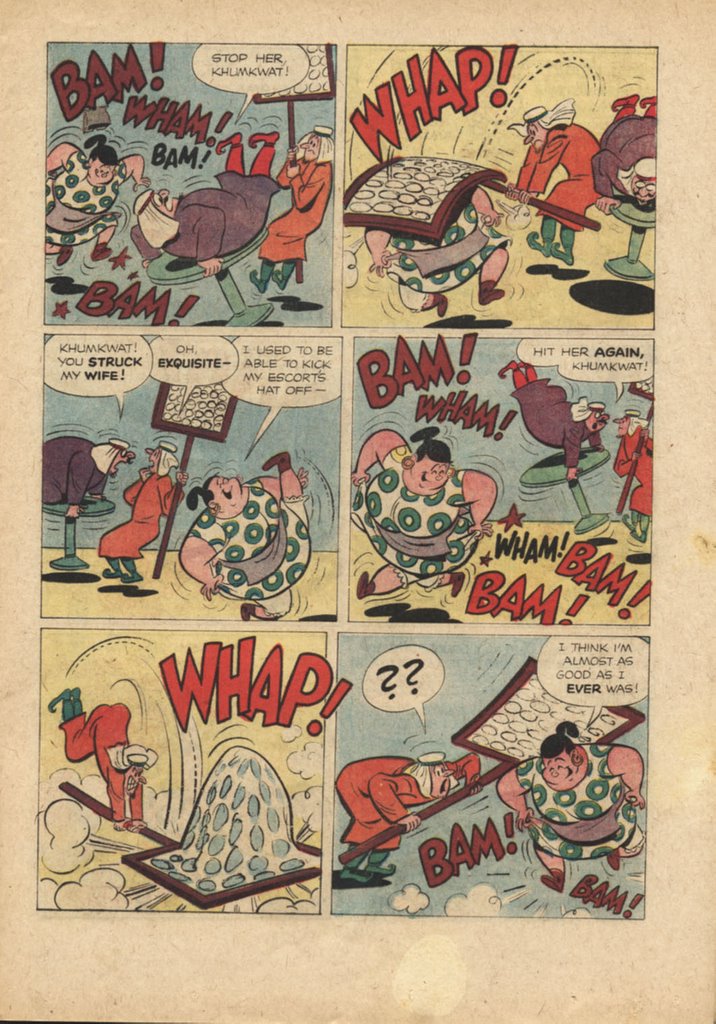
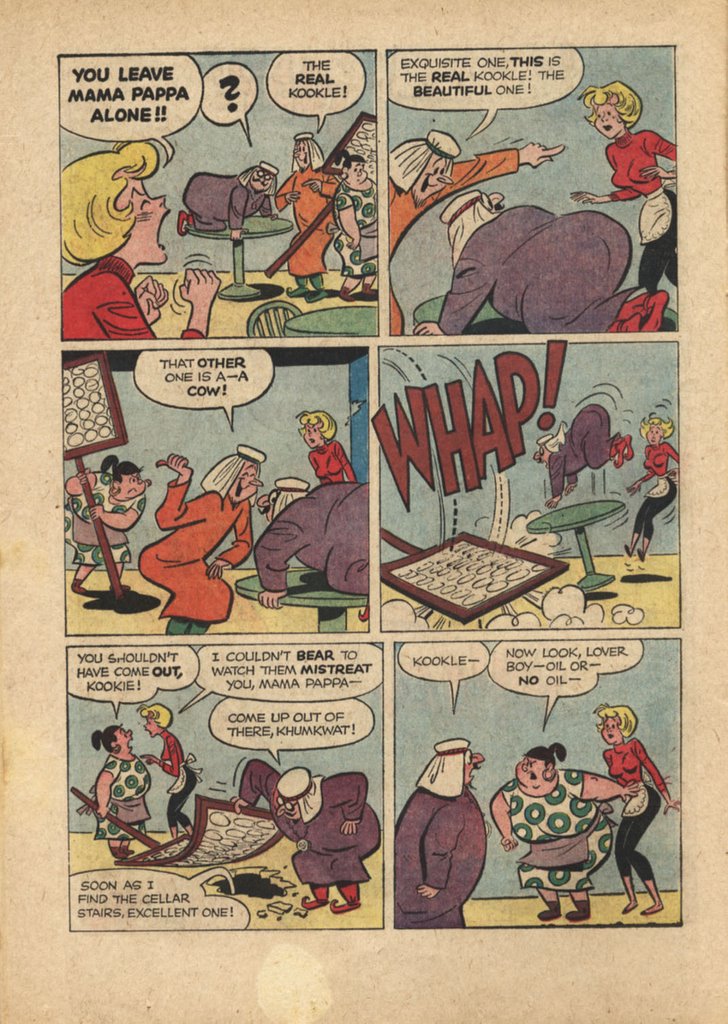
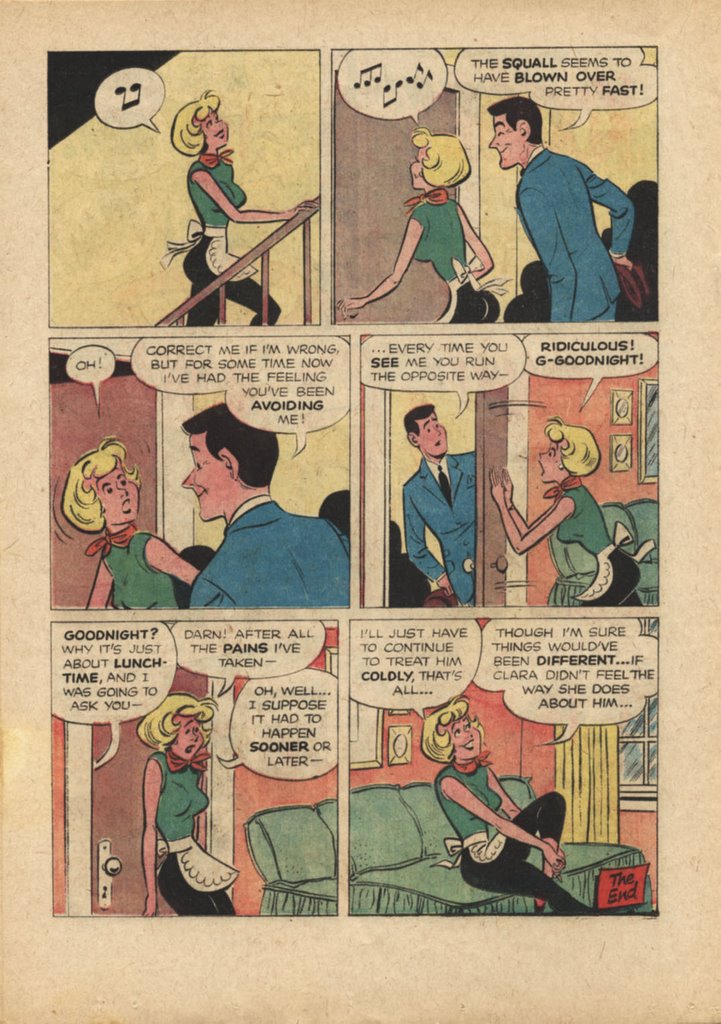
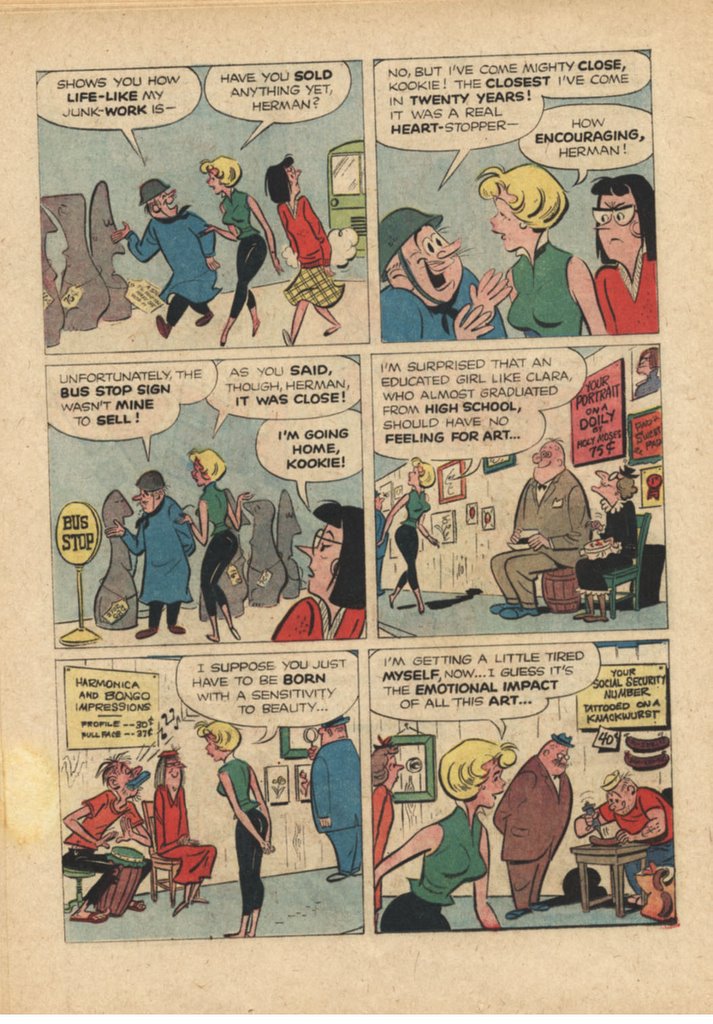
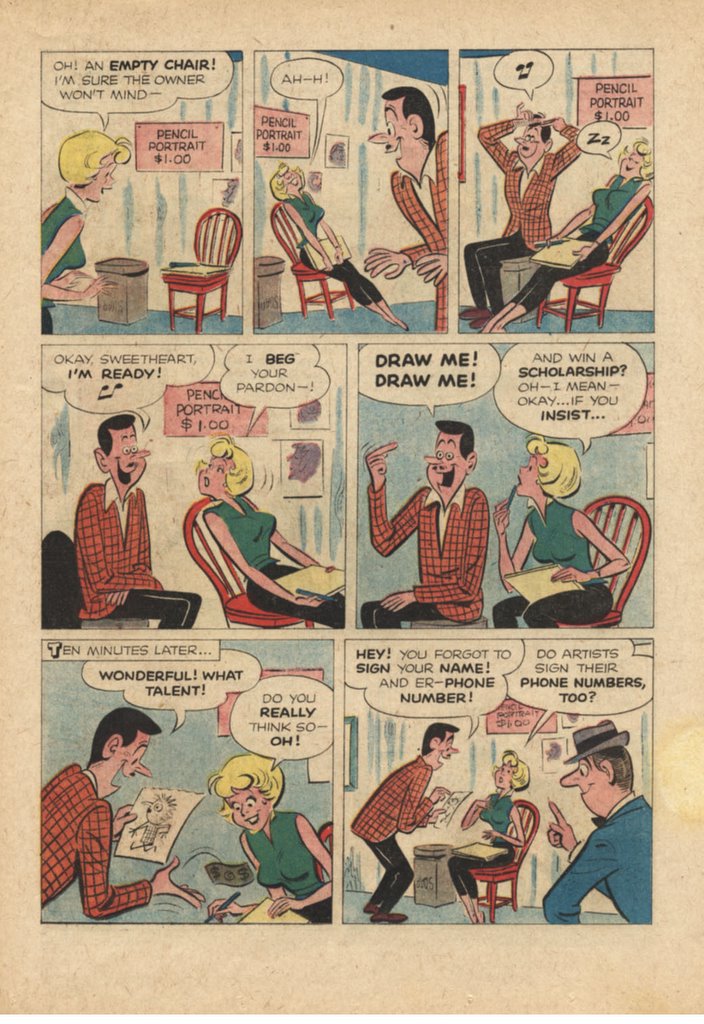
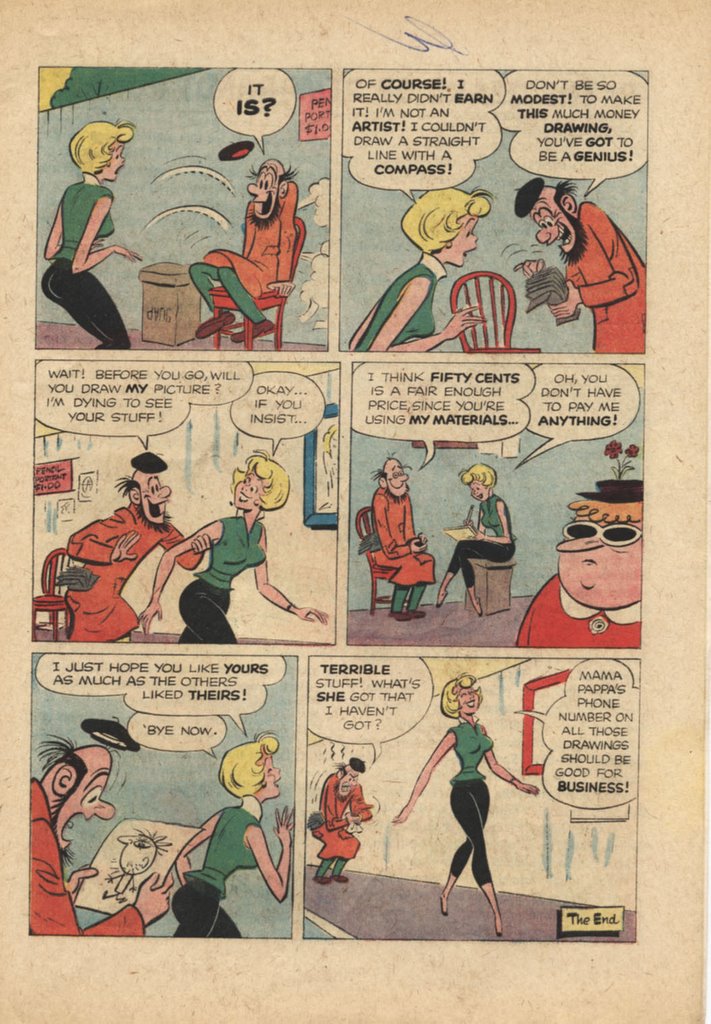
Fred also put out a request for somebody to post #2 online; this is my reply. The scans are not my own, I downloaded them from alt.binaries.pictures.comics a few months ago. The occasional snide commentary is all mine. You can click on each picture to expand it up to two times; at the second level of magnification it becomes more readable.


"Bring me the head of John the Beatnik!"


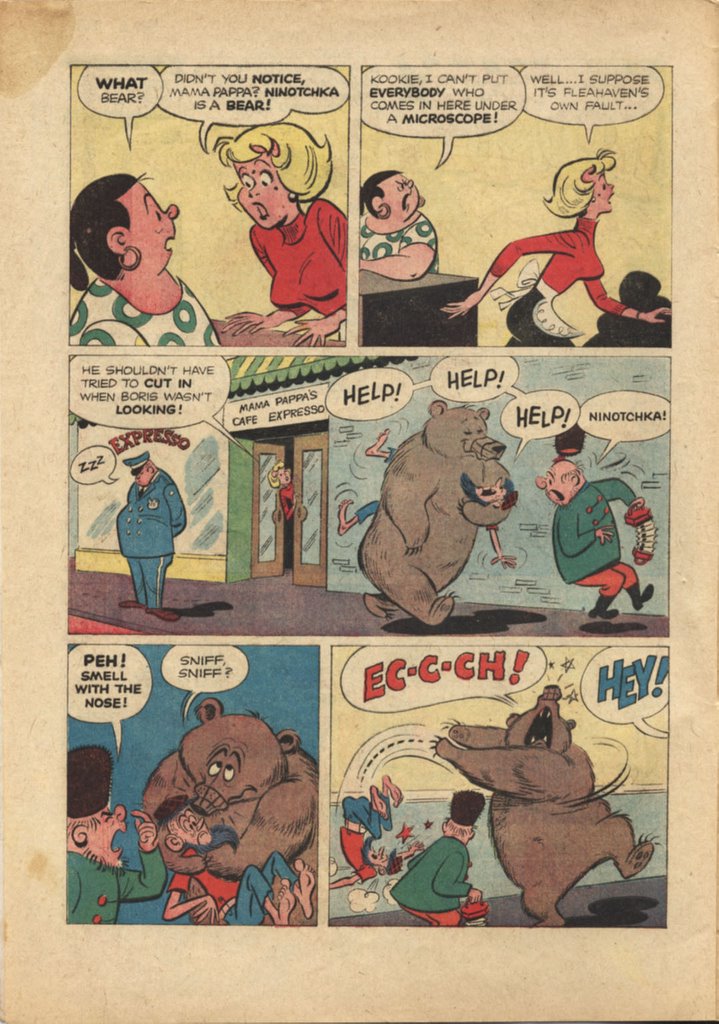
Kookie #2 Part 2--As Requested by Fred Hembeck


Who says comics aren't educational? Fleahaven gives us all a lesson in geopolitical realities here:


Kookie #2 Part 3--As Requested by Fred Hembeck

Mama Pappa's into inhalants?


More education on the quaint customs of Islam and the treatment of women:


Kookie #2 Part 4--As Requested by Fred Hembeck


Kookie #2 Part 5--As Requested by Fred Hembeck


Kookie #2 Part 6--As Requested by Fred Hembeck


Kookie #2 Part 7--As Requested by Fred Hembeck


Kookie #2 Part 8--As Requested by Fred Hembeck


Kookie #2 Part 9--As Requested by Fred Hembeck


Thursday, January 05, 2006

Convenient Comic Cliches of the Silver Age

#1--If you're suffering from a mental disturbance, you should never be told that you've gone crazy. People around you should humor your delusions.


"Serious damage to her mind, you say, Doc? Like--err, if she were to say that I'm really Superman?"

Saturday, December 24, 2005

The Fantastic Four

In the early 1960s, Marvel Comics had become something of a joke. They published a small line of magazines that mostly featured monsters with names like Fin Fang Foom or Shagg or Shamoo. But Stan Lee, the writer and editor for most of Marvel's stories noticed the superhero revival going on at DC Comics and decided to copy it. The first attempt was the Fantastic Four, a team title that was something of a knockoff of DC's Justice League of America.

The first issue told the origin of the team. The FF was made up of four characters who had travelled in a space ship to the radiation belt surrounding the Earth. The radiation caused strange mutations to the four. Reed Richards, the scientific genius leading the team, developed the power of stretchability, much like Plastic Man and the Elongated Man. Ben Grimm, a test pilot, turned into the super-strong (and super-ugly) Thing. Sue Storm, Reed's girlfriend, turned invisible, while Johnny Storm, her younger brother, burst into flame as the Human Torch.

The use of radiation as an origin device was new as far as I know, although Marvel would use it several more times in the next few years. Spider-Man, Daredevil and the Hulk would all see their powers result from exposure to radiation in one way or another.

The other novelty of the Fantastic Four was that the members were not "all for one and one for all". They bickered among themselves, especially Ben, who blamed Reed for his transformation into the homely Thing.

Thursday, December 15, 2005

The Elongated Man

The Elongated Man first appeared in The Flash #112, April-May 1960. The Flash kept getting upstaged by this stretchable sleuth called the Elongated Man. Although EM had been a hero every time he appeared, the Flash wondered if he wasn't secretly behind a series of puzzling robberies. Who is the Elongated Man, and how did he come to be?

We are told in a flashback. Ralph Dibny had been an ordinary boy in the Midwest, when he was fascinated by an India-Rubber Man in the sideshow at a carnival. He vowed to learn how to stretch himself, but none of the carnies would tell him their secret. Then he remembered that all the stretching men had drunk a product called Gingold. By studying the product, he isolated the stretching ingredient. At first it didn't work on him, but then suddenly he began stretching wildly.

The Flash is suspicious of Dibny, but Ralph actually captures the thieves that had been ruining his good name, and they become friends. Of course, there had been stretchable detectives in the past, most notably Plastic Man, and there would be more before long--Elastic Lad and Mr Fantastic arrived in the next year or two.

The Elongated Man was created by Carmine Infantino. In his earliest appearances he wore a stretchable purple and blue suit with a domino mask. He appeared regularly in The Flash for the next couple years.

Things changed dramatically for the Elongated Man in 1964. DC had decided to fix the problem with Batman. There were two main problems: the art and the editing sucked. DC solved the first by adding Infantino to the Batman stable, while Julie Schwartz took over the editing chores.

The pot sweetener for Infantino was that the Elongated Man got his own feature in Detective Comics, starting with #327, the May 1964 issue. This was one of the very few times in the DC universe that a supporting character had graduated to his own feature; the prior ones that I can think of are Lois Lane, Alfred (briefly), Robin and Jimmy Olsen.

In Detective #327, Ralph Dibny and his new wife, Sue, were returning from their honeymoon in Canada. Ralph is now the "famous Elongated Man"; apparently the earliest superhero to maintain another identity, yet not keep it a secret. The Fantastic Four have an argument, but they never had secret identities, whereas Ralph clearly gave his up. Plus he's clearly one of the earliest superheroes to be married.

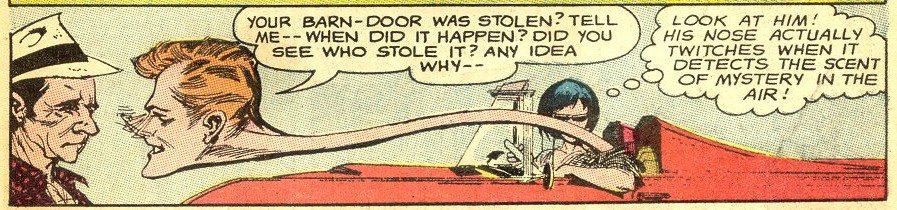
The pattern for the EM stories was established in that first appearance in Detective. Ralph and Sue are driving along, Ralph spots something suspicious and is off to investigate. The second story, in Detective #328, begins the tradition of Ralph's nose twitching when he scented a mystery:


The Elongated Man really hit the big time with Detective #331. For as long as Detective Comics had existed, it had always featured more than one story, and none of the other features had crossed over into Batman. But both those taboos were broken with "The Museum of Mixed-Up Men" in September 1964. Batman and the Elongated Man teamed up to defeat Boss Baron in a three-part adventure that consumed the entire issue. There was another crossover/full length story a year later in Detective #343's "The Secret War of the Phantom General". I don't believe there was another full-length story in Detective Comics after that until #500.

The next big change came at the end of Detective #350. Sue decided that her husband's costume was too boring, and gave him a new one, mostly red with black and yellow stripes. At about this time, the Batman TV show hit, and so the Elongated Man got read by a lot of people who otherwise would not have been reading a backup feature.

DC changed artists at Detective #357; Murphy Anderson and Sid Greene took over. Not sure what the story was there. For that issue only, Elongated Man's suit is primarily yellow. Perhaps a Reverse-Elongated Man? Or could the issue have been that the Silver Age Plastic Man comics DC had introduced made the uniforms too confusing?

The uniform changed again with Detective #359. Now it was purple with yellow and black. That was pretty much how it stayed for the rest of the run in Tec. Ironically the issue that finalized the uniform changes was also the one that doomed the Elongated Man's run in Detective, as it introduced the Barbara Gordon Batgirl. Elongated Man's last appearance in 'Tec was #383, so he appeared in 57 issues of Detective Comics. In Tec #384, Batgirl began an alternating feature with Robin.

I believe Elongated man next popped up in the Justice League of America during the mid-1970s.

Tuesday, December 13, 2005

Gay Batman?

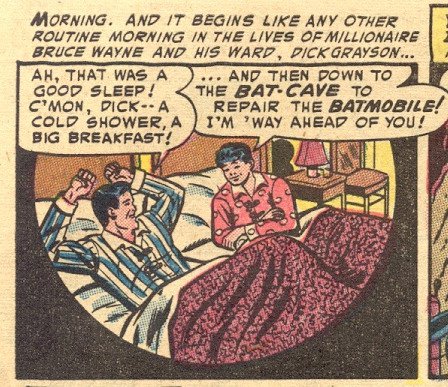
I'm pretty sick of this theory myself, but this is one of the odder panels in the Batman series (from Batman #84, June 1954):


Actually it just looks like a poor job of art by Sheldon Moldoff; a later panel makes it clear they are not actually sharing a bed:


Now, you can make something out of the fact that they're sharing a room in Wayne Manor, but it's just a literary device to skip a few panels of Dick hearing Bruce's nightmares and coming down the hall.

Thursday, December 01, 2005

Classic Stories of the 1960s: The Sleeper Saga

I haven't focused much on Marvel Comics of the Silver Age much thus far. One of my favorite stories from Stan Lee and Company was The Sleeper Saga, which appeared in Tales of Suspense #72-74.

Tales of Suspense was an anthology magazine back then, featuring two separate characters, Iron Man and Captain America. Cap was a relatively recent addition to the Marvel Silver Age, having been discovered floating in a block of ice in Avengers #4, about a year and a half earlier. Of course, he had been a mainstay of Marvel (then known as Timely) back in the Golden Age, fighting the Nazis and especially a Nazi villain named the Red Skull.

When Stan decided to bring him back they couldn't decide at first what to do with him. Should they keep him in the World War II setting and have him be a retro hero? Or should they tell modern tales. In the first year or so they varied back and forth with several modern stories interspersed with his World War II reminiscences. Remember, World War II was a particularly popular topic with youngsters due to the influence of Hollywood blockbusters like The Great Escape and The Longest Day.
In The Sleeper Saga, they hit on an superb idea; Cap would appear in the present day, but he'd still be fighting the Nazis. The background for the story was that the Red Skull had accidentally killed himself late in World War II, when a hand grenade he threw bounced off Captain America's shield and landed near him. With his dying breath he vowed that he would have his revenge twenty years later.

Twenty years later was conveniently 1965, when the saga started with Tales of Suspense #72:


There were three sleepers; the one shown on the cover was only the first. Captain America remembers the Red Skull's warning and notices that today is exactly 20 years later. He has a list of names and locations that he took from the dying Red Skull, so he sets off in search of the people. Unfortunately he arrives too late, and the first sleeper has been awoken. Cap tries to battle it, but he's no match for the giant robot, and it goes off in search of the second sleeper.

The second sleeper turns out to be an incredible airplane, which looks like a flying stingray. When it meets up with the first sleeper, the two combine into a terrible flying robot. Cap notes that there is room on top of the airplane for yet a third sleeper. What will it be?


Cap realizes that the Red Skull's plan is to destroy the entire world by having the sleepers burrow down into the Artic ice and thus into the earth's core, then blow themselves up. In the end, Captain America sky-dives onto the combined sleepers and sabotages them with a blowtorch, so they explode where they can't do significant damage to the planet.

I believe there was another sleeper that came along later. The Red Skull would return before the end of the year, still alive despite his apparent death in ToS #72.

Wednesday, November 30, 2005

Lame Criminals of the 1960s--The Polka Dot Man


The only explanation I can think of for this goofy criminal is that some writer noticed the popularity of polka dots at the time (remember this was the era of the song "Itsy-Bitsy Teenie-Weenie Yellow Polka Dot Bikini") and decided to make a criminal with that theme. PD Man is another one of those crooks where you can't help thinking he could make a fortune just selling his inventions.

Saturday, November 26, 2005

More Recycling

Aka the Kendricks of Gotham City. In World's Finest #2, a brave attorney named William Kendrick is appointed special prosecutor in order to stop a gang war. In World's Finest #3, Frank Kendrick is a crooked businessman who hires the Scarecrow to terrorize his partner.

Wednesday, November 23, 2005

Green Lantern Silver Age: Qward

There's an odd little symetry to Flash #106-108 and Green Lantern #2-4. In both cases the issues are the second through fourth of the respective title for the Silver Age. Flash Comics had been around in the Golden Age for 104 issues, so when DC decided to give the Silver Age Flash (Barry Allen) his own magazine they started with issue #105, although technically the new comic was known as "The Flash". But with Green Lantern DC decided to go with a new #1 issue, even though there had been over 30 issues of the Golden Age Green Lantern.

But aside from that, DC tried something interesting. In Flash #106-108, they presented three consecutive stories featuring one villain, Gorilla Grodd. They also presented a slightly different world--Gorilla City, which vibrated on a different plane on earth and thus was invisible to humans.

In Green Lantern 2-4, DC presented three consecutive stories featuring one villain, or should I say, a new universe of villains. The universe of Qward was organized along evil lines. There were some outlaws who insisted on being honest, but they were persecuted. One of them, Telle-Teg, contacted Hal Jordan, knowing he was a rival of Green Lanterns for the affections of Carol Ferris, to ask him to help the honest citizens of Qward to emigrate to our world. This is accomplished but not before Telle-Teg is killed. The surviving honest Qwardians warn GL that the evil Qwardians are planning on stealing "all the power batteries in this universe".

Sure enough, in the following issue, the Qwardians steal GL's power battery by a clever ruse. They recreate Ferris Aircraft Company and observe where GL has the battery hidden. They steal it from the actual location while Hal is reciting the oath to the phony battery.

But then comes a completely unbelievable plot twist. Pieface, Hal Jordan's Eskimo airplane mechanic, is fixing his landlady's TV antenna when he suddenly tunes in the thoughts of the Qwardians who are transmitting to their homeword about the successful theft of the power battery. The Qwardians succeed in sending the power battery back to Qward, but Green Lantern trails it there and retrieves it.

In the final chapter of the initial Qward saga, Pieface is wounded by radiation from a rocket that was intended to hit GL. In order to save his buddy, GL goes back to Qward to face its champion, a robot who has been designed to destroy Green Lantern. Unfortunately for the Qwardians, the programming was not tight enough, and the robot realized the difference between good and evil, and agreed to fight alongside GL against its evil masters. It gives GL the cure for Pieface and holds off the Qwardians long enough for Hal to save his buddy.

There is at least one mistake in the series. In GL #3, the capital city is given as Qwar-Deen, but in the next issue it's referred to as Qward City.