


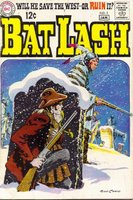

Bill Jourdain has a terrific post on a very significant Silver Age Batman story, and how it was swiped from a Golden Age Robin tale. Great find, Bill!
Jacque Nodell covers hippie love at a rock concert. In the comics, and promises a whole bunch of Woodstock romance stories in August for the 40th (gulp!) anniversary of that festival. I was a 14-year-old kid heading up with my parents to my aunt's house on the lake that summer and we got caught in the famous traffic jam that shut down the NY State Thruway (fortunately we got out of it reasonably quickly).
While we're on the subject of romance, here are 66 types of men that women should avoid, by John Glenn Taylor. This post starts out good and gets better and better. Very funny and a terrific job!
Mark Engblom has another of his terrific themed puzzles, this time about fire-oriented superheroes. Gotta act on this one quick, though because today's the final day to submit answers. I know that #2 is Fire Boy (from the Substitute Legion) and #23 is Sun Boy, but I'd really need to Google hard to find the rest. I think #16 was that Japanese guy that was in X-Men, but you can see how pathetic I am about comics past 1977 or so.
I have had Ramon Villalobos on my blogroll for awhile, and discovered that he's gone the podcast route. They've got some issues to work out with the relative volumes of the two guys doing the show, but it was interesting to hear them discuss the new Wednesday Comics. Also check out some examples of Ramon's art; it's quite obvious he's lying when he says he's "an incompetent artist."
Wednesday, July 15, 2009
Tuesday, July 14, 2009
Trivia Quiz #27: Answers
1. What did Pieface collect?
A. Autographs
B. Stamps
C. Coins
D. Comic Books
The answer is B. Pieface was a philatelist:

This was a major point in the origin story of Sonar in GL #14.
2. Abin Sur, the prior Green Lantern for Earth's sector, had what job in his non-GL identity?
A. Sports star
B. Newspaperman
C. Physics professor
D. History professor
Abin Sur was a history professor, as we learned in Green Lantern #16's slightly misnamed Earth's First Green Lantern:

I say slightly misnamed as Abin Sur was not from Earth although he did patrol our sector.
3. True or false: Hal Jordan was shown smoking a pipe occasionally.
A. True
B. False
The answer is A, True, as you can see in the panels above with him discussing stamps with Pieface.
4. Who was Abel Tarrant?
A. The Tattoed Man
B. Sonar
C. Star Sapphire
D. Black Hand
Abel Tarrant was the Tattoed Man.
5. What was Green Lantern's occupation in 5700 AD?
A. Spaceball player
B. Solar Director
C. Superhero
D. Scientist
GL was the Solar Director in 5700:

Jonathan Miller got #3 and #4 correct, as did Michael Sensei. Jacque Nodell takes second place for the week, getting #2, #3 and #4 correct. Michael Rebain gets the blue ribbon, with #2, #3, #4 and #5. Great job!
A. Autographs
B. Stamps
C. Coins
D. Comic Books
The answer is B. Pieface was a philatelist:

This was a major point in the origin story of Sonar in GL #14.
2. Abin Sur, the prior Green Lantern for Earth's sector, had what job in his non-GL identity?
A. Sports star
B. Newspaperman
C. Physics professor
D. History professor
Abin Sur was a history professor, as we learned in Green Lantern #16's slightly misnamed Earth's First Green Lantern:

I say slightly misnamed as Abin Sur was not from Earth although he did patrol our sector.
3. True or false: Hal Jordan was shown smoking a pipe occasionally.
A. True
B. False
The answer is A, True, as you can see in the panels above with him discussing stamps with Pieface.
4. Who was Abel Tarrant?
A. The Tattoed Man
B. Sonar
C. Star Sapphire
D. Black Hand
Abel Tarrant was the Tattoed Man.
5. What was Green Lantern's occupation in 5700 AD?
A. Spaceball player
B. Solar Director
C. Superhero
D. Scientist
GL was the Solar Director in 5700:

Jonathan Miller got #3 and #4 correct, as did Michael Sensei. Jacque Nodell takes second place for the week, getting #2, #3 and #4 correct. Michael Rebain gets the blue ribbon, with #2, #3, #4 and #5. Great job!

Monday, July 13, 2009
Best Character Motivation of the Silver Age
This again proves to be a very easy choice, but I want to dwell on it for awhile because it is so crucially important. Every character must have a motivation for what he or she does, and although the Silver Age writers frequently forgot about positive characterization for their heroes and negative characterization for the villains, they never forgot that either must have some motivation for what they do.
If you look at the supervillains, they usually start with one motivation: to steal lots of money. But if you watch them closely, you'll see that almost all of them start their second and often later appearances with a different motivation: To defeat the superhero who put them in jail.
Looking at it this way does also emphasize the similarities between Lex Luthor and Dr Doom. Both of them hate their nemesis (Superman and Mr Fantastic respectively), at least partially because they blame them irrationally for botched scientific experiments--which left Luthor bald and Dr Doom hideously scarred.
So now let's look at the major DC heroes' motivation during the Silver Age:
Flash: Barry Allen is already a policeman and he had read the Golden Age adventures of the Flash and this inspired him to be a superhero.
Green Lantern: Hal Jordan was a test pilot who was judged worthy to become the new Green Lantern when Abin Sur died.
Atom: Ray Palmer acts as Ivy Town superhero to help his fiancee Jean Loring become a successful defense attorney so they can marry.
Martian Manhunter: Stuck on Earth so he might as well be a cop.
Hawkman: Sent to Earth to learn our police methods.
Now contrast that with Marvel:
FF: Get superpowers and are generally good people to begin with who are willing to take risks.
Iron Man: Gets a terrific defensive costume and he's already a weapons manufacturer so he might as well fight the commies.
X-Men: Save the humans from the evil mutants.
Daredevil: Fight crime while not being Matt Murdock because he promised his dad he wouldn't fight.
Thor: His motivation is never really explained; he's just a noble god.
Spiderman: He didn't stop a robber and the guy ended up killing his uncle Ben.
Whose motivation in there is compelling? Whose is the most believable? Whose motivation has the reader saying, "That's what I'd do, too!"
It seems pretty obvious to me. Spiderman's motivation is personal. It involves a close family member; family motivations are always compelling. It's directly tied to fighting crime in a superhero costume; nobody else can say that.
Daredevil's motivation is close. Certainly his father's death is what inspires him to break up the Fixer's gang. And the Atom has an interesting personal motivation.
But I think overall Peter Parker's motivation is the best in the entire Silver Age; indeed it is matched only by Batman's for personal drama.
If you look at the supervillains, they usually start with one motivation: to steal lots of money. But if you watch them closely, you'll see that almost all of them start their second and often later appearances with a different motivation: To defeat the superhero who put them in jail.
Looking at it this way does also emphasize the similarities between Lex Luthor and Dr Doom. Both of them hate their nemesis (Superman and Mr Fantastic respectively), at least partially because they blame them irrationally for botched scientific experiments--which left Luthor bald and Dr Doom hideously scarred.
So now let's look at the major DC heroes' motivation during the Silver Age:
Flash: Barry Allen is already a policeman and he had read the Golden Age adventures of the Flash and this inspired him to be a superhero.
Green Lantern: Hal Jordan was a test pilot who was judged worthy to become the new Green Lantern when Abin Sur died.
Atom: Ray Palmer acts as Ivy Town superhero to help his fiancee Jean Loring become a successful defense attorney so they can marry.
Martian Manhunter: Stuck on Earth so he might as well be a cop.
Hawkman: Sent to Earth to learn our police methods.
Now contrast that with Marvel:
FF: Get superpowers and are generally good people to begin with who are willing to take risks.
Iron Man: Gets a terrific defensive costume and he's already a weapons manufacturer so he might as well fight the commies.
X-Men: Save the humans from the evil mutants.
Daredevil: Fight crime while not being Matt Murdock because he promised his dad he wouldn't fight.
Thor: His motivation is never really explained; he's just a noble god.
Spiderman: He didn't stop a robber and the guy ended up killing his uncle Ben.
Whose motivation in there is compelling? Whose is the most believable? Whose motivation has the reader saying, "That's what I'd do, too!"
It seems pretty obvious to me. Spiderman's motivation is personal. It involves a close family member; family motivations are always compelling. It's directly tied to fighting crime in a superhero costume; nobody else can say that.
Daredevil's motivation is close. Certainly his father's death is what inspires him to break up the Fixer's gang. And the Atom has an interesting personal motivation.
But I think overall Peter Parker's motivation is the best in the entire Silver Age; indeed it is matched only by Batman's for personal drama.
Sunday, July 12, 2009
Saturday, July 11, 2009
Trivia Quiz #27: Green Lantern
1. What did Pieface collect?
A. Autographs
B. Stamps
C. Coins
D. Comic Books
2. Abin Sur, the prior Green Lantern for Earth's sector, had what job in his non-GL identity?
A. Sports star
B. Newspaperman
C. Physics professor
D. History professor
3. True or false: Hal Jordan was shown smoking a pipe occasionally.
A. True
B. False
4. Who was Abel Tarrant?
A. The Tattoed Man
B. Sonar
C. Star Sapphire
D. Black Hand
5. What was Green Lantern's occupation in 5700 AD?
A. Spaceball player
B. Solar Director
C. Superhero
D. Scientist
A. Autographs
B. Stamps
C. Coins
D. Comic Books
2. Abin Sur, the prior Green Lantern for Earth's sector, had what job in his non-GL identity?
A. Sports star
B. Newspaperman
C. Physics professor
D. History professor
3. True or false: Hal Jordan was shown smoking a pipe occasionally.
A. True
B. False
4. Who was Abel Tarrant?
A. The Tattoed Man
B. Sonar
C. Star Sapphire
D. Black Hand
5. What was Green Lantern's occupation in 5700 AD?
A. Spaceball player
B. Solar Director
C. Superhero
D. Scientist
Thursday, July 09, 2009
Iron Man Run Part 7--End of the Tales of Suspense Issues
As ToS #95 begins, an intruder has gotten into Stark's main plant. Tony's response?

My response would be more along the lines of "An intruder within those walls? What is this, like the 50th time that's happened?" I haven't kept track of it, but I pointed out that between ToS #52 and #63, the only issues that didn't feature an attack on Stark's facilities or one of his weapons were #58 and #62.
We discover who the intruder is here:

Sitwell was an amusing character. On the one hand you can see him as a poke by Lee at the DC Boy Scout heroes, but on the other hand, who was he really mimicking but Stan himself with the "Don't yield! Back SHIELD!" boosterism?
The villain for the issue is the Grey Gargoyle, an old Thor foe who can fly and turn people into stone for one hour. But when he turns Iron Man to stone he decides to kill him by tossing him off the roof of the factory.
In the next issue, we find that Sitwell, despite his rah-rah attitude, knows what to do in an emergency and saves Iron Man by driving a convenient nearby truck filled with sand under him to break the fall. In a crucial battle, Sitwell intentionally touches the Gargoyle, having seen that the building was about to collapse and he would die if he was not turned into stone. It's a nice little bit of characterization for Sitwell. Iron Man short-circuits the Grey Gargoyle's abilities, even though this incapacitates him.
And Sitwell behaves a little nutty, trying to blow Iron Man's helmet off:

Meanwhile, Morgan Stark is in trouble with the gamblers once again. But after learning that Iron Man is incapacitated, Morgan realizes that he can pay off his debts by delivering Shell-Head to the leader of the Maggia. He bluffs his way into the factory by pretending to be on a mission from Tony, and with some help from the guards gets Iron Man into his car. Fortunately, it's a car with a cigarette lighter in the back seat that Tony uses to charge himself up a bit while being delivered to the Maggia's waiting ship.
Tony tries to capture the hoodlums, but he gets caught behind a sliding door with a new villain called Whiplash. I know, how can a guy with a mere whip beat Iron Man? But it turned out this is a special kind of whip:

Meanwhile Sitwell has finally discovered that Iron Man has been kidnapped by Morgan Stark. He also finds himself confronted by a bevy of Stark's girlfriends, which flusters him. Sitwell eventually tracks down Morgan and learns that Iron Man is on the Maggia's ship (which doubles as a gambling casino. So Sitwell pretends to be a gambler to get on board.
Iron Man manages to defeat Whiplash, but he has run out of power and his heart is giving out again. As the head of the Maggia (Big M) prepares to examine his suit of armor, the ship is attacked by AIM, another criminal syndicate that had battled SHIELD in the past. Water is rushing in and Iron Man is stuck to a magnetic table. How can he survive?
After Tales of Suspense #99, the magazine was changed to Captain America. The story here is continued in Iron Man and Sub-Mariner #1, a stop-gap issue before Iron Man #1. But since this is the final TOS issue, it's a good breaking point.
Comments: Having married off Pepper and Happy, Stan apparently forgot about them; they last appeared in TOS #91. An extended honeymoon? They did eventually return, but eight months is a pretty long absence. It is also around this point that the Marvel Universe really began to interlock. There'd always been connections between the various characters and villain crossovers, but now it became more difficult to read a single Marvel character without being familiar with the other series.

My response would be more along the lines of "An intruder within those walls? What is this, like the 50th time that's happened?" I haven't kept track of it, but I pointed out that between ToS #52 and #63, the only issues that didn't feature an attack on Stark's facilities or one of his weapons were #58 and #62.
We discover who the intruder is here:

Sitwell was an amusing character. On the one hand you can see him as a poke by Lee at the DC Boy Scout heroes, but on the other hand, who was he really mimicking but Stan himself with the "Don't yield! Back SHIELD!" boosterism?
The villain for the issue is the Grey Gargoyle, an old Thor foe who can fly and turn people into stone for one hour. But when he turns Iron Man to stone he decides to kill him by tossing him off the roof of the factory.
In the next issue, we find that Sitwell, despite his rah-rah attitude, knows what to do in an emergency and saves Iron Man by driving a convenient nearby truck filled with sand under him to break the fall. In a crucial battle, Sitwell intentionally touches the Gargoyle, having seen that the building was about to collapse and he would die if he was not turned into stone. It's a nice little bit of characterization for Sitwell. Iron Man short-circuits the Grey Gargoyle's abilities, even though this incapacitates him.
And Sitwell behaves a little nutty, trying to blow Iron Man's helmet off:

Meanwhile, Morgan Stark is in trouble with the gamblers once again. But after learning that Iron Man is incapacitated, Morgan realizes that he can pay off his debts by delivering Shell-Head to the leader of the Maggia. He bluffs his way into the factory by pretending to be on a mission from Tony, and with some help from the guards gets Iron Man into his car. Fortunately, it's a car with a cigarette lighter in the back seat that Tony uses to charge himself up a bit while being delivered to the Maggia's waiting ship.
Tony tries to capture the hoodlums, but he gets caught behind a sliding door with a new villain called Whiplash. I know, how can a guy with a mere whip beat Iron Man? But it turned out this is a special kind of whip:

Meanwhile Sitwell has finally discovered that Iron Man has been kidnapped by Morgan Stark. He also finds himself confronted by a bevy of Stark's girlfriends, which flusters him. Sitwell eventually tracks down Morgan and learns that Iron Man is on the Maggia's ship (which doubles as a gambling casino. So Sitwell pretends to be a gambler to get on board.
Iron Man manages to defeat Whiplash, but he has run out of power and his heart is giving out again. As the head of the Maggia (Big M) prepares to examine his suit of armor, the ship is attacked by AIM, another criminal syndicate that had battled SHIELD in the past. Water is rushing in and Iron Man is stuck to a magnetic table. How can he survive?
After Tales of Suspense #99, the magazine was changed to Captain America. The story here is continued in Iron Man and Sub-Mariner #1, a stop-gap issue before Iron Man #1. But since this is the final TOS issue, it's a good breaking point.
Comments: Having married off Pepper and Happy, Stan apparently forgot about them; they last appeared in TOS #91. An extended honeymoon? They did eventually return, but eight months is a pretty long absence. It is also around this point that the Marvel Universe really began to interlock. There'd always been connections between the various characters and villain crossovers, but now it became more difficult to read a single Marvel character without being familiar with the other series.
Tuesday, July 07, 2009
Catman--Batman's Swipe of Blackhawk?
This one requires a bit of explanation. Last fall, I reviewed Blackhawk #148, and pointed out several areas of similarity between those stories and some earlier/later Batman stories. Given that Jack Schiff was editing both magazines, it seemed reasonable to assume that plots and characters had been swiped wholesale in some cases.
So it is with the Catman. Before we get into the history of the character, let's just post two covers that show the swipe:


In the original, Blackhawk #141 (October 1959), the Blackhawks encountered a boastful pilot/crook called the Catman, who announces he's going to commit a daring crime, and who then gives his location. The Blackhawks arrive just in time to see the Catman crash his plane, but when they land:

Catman conveniently explains that he has already used up four other lives prior to meeting the Blackhawks, so he has four remaining. Whether he is telling the truth or not, the countdown starts at four for the purposes of the story. He intentionally races through a deadly fire (three) and deliberately causes a landslide (2). But when Blackhawk proves that Catman also used up a life getting over the electrified fence, the crook gives up rather than relinquish his final life. At the end there's a bit of a hint that perhaps Blackhawk fooled CM:

Note as well that the credit for the pencils in the Blackhawk issue go to Dillin; want to guess who drew the covers for the first two Catman appearances in Detective? Yep. As far as I know, those are Dillin's only work on the character (outside of the Justice League), although he did not do the cover to Detective #325 shown above; that one's by Moldoff.
The introduction in the Batman mythology came with Detective #311. Catman (yes, they spelled it with the hyphen, and no, I will not) debuted in that issue and more important, he was one of the rare Batman characters of that time who was not created by Sheldon Moldoff:

Jim Mooney did the interior artwork for the first two Catman stories in Batman, while Moldoff did the last issue.
There is a key subplot in the story that appears shortly after the revelation that Catman is attracted to Batwoman. I'm reading Submariner and Sue Storm, but it's especially interesting because the story mentions him being inspired by the Catwoman, who has been gone from the Batman universe for years and would not reappear for another 3+ years (well after her first appearance on TV).

At the end of that story, the Catman (apparently) dies. It's an obvious plot development, and the next appearance, in Tec #318 actually gave us the return of the Catman and a new Catwoman:

In this story, the Catman returns. Batwoman chases after him, but is stymied when his kitty-car jumps over a ravine. She crashes and looks likely to fall from a ledge, when the Catman comes to the rescue:

Batman may be the world's greatest detective, but he clearly doesn't understand women. Batwoman confesses to having mixed feelings about Catman. Part of it no doubt was the truth of what he told her after saving her life:
"Batman will never marry you! You're a fool to waste your time on him!"
Later, a clumsy mistake by Batwoman results in the Catman getting away. This echoes some of the early Catwoman tales, where Batman would apparently allow her to get away. This leads to an argument between Batman and Batwoman, covered enthusiastically by the newspapers. Batwoman bails out one of the Catman's henchmen and asks to be taken to the Catman, so that she can become his Catwoman. But it was all a plot to locate the Catman's hideout, and a homing beacon that Batwoman carried resulted in Batman and Robin arriving. At the end of this story, Catman is again apparently killed.
His third (and as far as I know, final) appearance is in Detective #325, the cover of which is shown near the top of this post. The story is basically a swipe of the idea from Blackhawk #141, that the Catman has nine lives. Instead of getting his extra lives from an African witch-doctor, he gets it from the cloth that was woven into his cape.
But Batwoman learns this secret when she examines the Catwoman costume she had worn in Detective #318:

Somehow she senses that it's nine lives altogether for her and the Catman combined, so she uses up a couple of them while wearing the Catwoman outfit so that next time they face him, he'll be on his final life. And here's a real rarity in the Silver Age: Robin finishing off the villain:

I think I'm going to have to read more Blackhawk issues to see if I can find similar swipes. I seem to recall that the old Boy Commandos and Robin villain, Crazy Quilt, appeared in a Blackhawk story in the 1960s.
Update: See also this terrific post by Bill Jourdain, that we might call, "When Batman Swiped Robin".
Update II: Bill also did a podcast a few years back on the Golden Age Catman, a character from the Holyoke line of comics. I should also note that there was a one-shot Batman villain in the GA called the King of the Cats who turned out to be the Catwoman's brother.
So it is with the Catman. Before we get into the history of the character, let's just post two covers that show the swipe:


In the original, Blackhawk #141 (October 1959), the Blackhawks encountered a boastful pilot/crook called the Catman, who announces he's going to commit a daring crime, and who then gives his location. The Blackhawks arrive just in time to see the Catman crash his plane, but when they land:

Catman conveniently explains that he has already used up four other lives prior to meeting the Blackhawks, so he has four remaining. Whether he is telling the truth or not, the countdown starts at four for the purposes of the story. He intentionally races through a deadly fire (three) and deliberately causes a landslide (2). But when Blackhawk proves that Catman also used up a life getting over the electrified fence, the crook gives up rather than relinquish his final life. At the end there's a bit of a hint that perhaps Blackhawk fooled CM:

Note as well that the credit for the pencils in the Blackhawk issue go to Dillin; want to guess who drew the covers for the first two Catman appearances in Detective? Yep. As far as I know, those are Dillin's only work on the character (outside of the Justice League), although he did not do the cover to Detective #325 shown above; that one's by Moldoff.
The introduction in the Batman mythology came with Detective #311. Catman (yes, they spelled it with the hyphen, and no, I will not) debuted in that issue and more important, he was one of the rare Batman characters of that time who was not created by Sheldon Moldoff:

Jim Mooney did the interior artwork for the first two Catman stories in Batman, while Moldoff did the last issue.
There is a key subplot in the story that appears shortly after the revelation that Catman is attracted to Batwoman. I'm reading Submariner and Sue Storm, but it's especially interesting because the story mentions him being inspired by the Catwoman, who has been gone from the Batman universe for years and would not reappear for another 3+ years (well after her first appearance on TV).

At the end of that story, the Catman (apparently) dies. It's an obvious plot development, and the next appearance, in Tec #318 actually gave us the return of the Catman and a new Catwoman:

In this story, the Catman returns. Batwoman chases after him, but is stymied when his kitty-car jumps over a ravine. She crashes and looks likely to fall from a ledge, when the Catman comes to the rescue:

Batman may be the world's greatest detective, but he clearly doesn't understand women. Batwoman confesses to having mixed feelings about Catman. Part of it no doubt was the truth of what he told her after saving her life:
"Batman will never marry you! You're a fool to waste your time on him!"
Later, a clumsy mistake by Batwoman results in the Catman getting away. This echoes some of the early Catwoman tales, where Batman would apparently allow her to get away. This leads to an argument between Batman and Batwoman, covered enthusiastically by the newspapers. Batwoman bails out one of the Catman's henchmen and asks to be taken to the Catman, so that she can become his Catwoman. But it was all a plot to locate the Catman's hideout, and a homing beacon that Batwoman carried resulted in Batman and Robin arriving. At the end of this story, Catman is again apparently killed.
His third (and as far as I know, final) appearance is in Detective #325, the cover of which is shown near the top of this post. The story is basically a swipe of the idea from Blackhawk #141, that the Catman has nine lives. Instead of getting his extra lives from an African witch-doctor, he gets it from the cloth that was woven into his cape.
But Batwoman learns this secret when she examines the Catwoman costume she had worn in Detective #318:

Somehow she senses that it's nine lives altogether for her and the Catman combined, so she uses up a couple of them while wearing the Catwoman outfit so that next time they face him, he'll be on his final life. And here's a real rarity in the Silver Age: Robin finishing off the villain:

I think I'm going to have to read more Blackhawk issues to see if I can find similar swipes. I seem to recall that the old Boy Commandos and Robin villain, Crazy Quilt, appeared in a Blackhawk story in the 1960s.
Update: See also this terrific post by Bill Jourdain, that we might call, "When Batman Swiped Robin".
Update II: Bill also did a podcast a few years back on the Golden Age Catman, a character from the Holyoke line of comics. I should also note that there was a one-shot Batman villain in the GA called the King of the Cats who turned out to be the Catwoman's brother.
Monday, July 06, 2009
Elsewhere in the Comicsphere
First off, I should note that I have deleted a few blogs from the sidebar for inactivity. I don't like doing it, but I use the blogroll for surfing myself, and know how disappointed I am to surf over to another blog and see there's still no update. I am particularly sorry to see a few of them go, including Dial B for Blog (officially retired), the Fortress of Fortitude (officially retired) and I Believe in Bat-Mite (no posts in over two months). If you were previously on my blogroll and were deleted because of inactivity, please let me know if you start posting again.
On the plus side, I've added Blinded Me With Comics, the 1980s comic blog of our old buddy the Groovy Agent. If you're familiar with Diversions of the Groovy Kind (and who isn't), you'll find similar posts at BMWC, only focused on the Extraordinary Eighties rather than the Scintillating Seventies.
And although the cobwebs on other blogs resulted in my delinking them, I'm happy to add the House of Cobwebs, another terrific nostalgia zone. I like this post on Blackhawk #189, the famed "cavemen on flying jet-skis" issue.
Longtime blogroll resident Superman Fan has a terrific and blistering review of Superboy #143's The Big Fall. This one does seem like quite a crazy story; I love the Superboy Train.
Fourth of July bloggers: Golden Age Comics has a terrific patriotic Superman cover from the 1940s. Superman Fan has another patriotic pose by the Man of Steel. Mark Engblom shows the many Statue of Liberty covers over the years.
On the plus side, I've added Blinded Me With Comics, the 1980s comic blog of our old buddy the Groovy Agent. If you're familiar with Diversions of the Groovy Kind (and who isn't), you'll find similar posts at BMWC, only focused on the Extraordinary Eighties rather than the Scintillating Seventies.
And although the cobwebs on other blogs resulted in my delinking them, I'm happy to add the House of Cobwebs, another terrific nostalgia zone. I like this post on Blackhawk #189, the famed "cavemen on flying jet-skis" issue.
Longtime blogroll resident Superman Fan has a terrific and blistering review of Superboy #143's The Big Fall. This one does seem like quite a crazy story; I love the Superboy Train.
Fourth of July bloggers: Golden Age Comics has a terrific patriotic Superman cover from the 1940s. Superman Fan has another patriotic pose by the Man of Steel. Mark Engblom shows the many Statue of Liberty covers over the years.
Friday, July 03, 2009
DC's Revolutionary War Character

For some reason, very few comics have been set back in the revolutionary days. Obviously there are some problems with stories of the past connecting with young readers, but that never stopped Westerns or WWII comics, which were hugely popular in the 1950s.
Tomahawk was a white man who had been raised by American Indians, so he had the woodsman abilities of the natives combined with an Anglo appearance. For most of his run, he was drawn by Fred Ray, a Revolutionary War buff who insured historical accuracy in his artwork. He first appeared in Star Spangled Comics #69, and within a few years had bumped Robin, the Boy Wonder, off the cover of that magazine. He was added as a feature in World's Finest, and later graduated to his own book in 1950.
The timing was pretty good, as with his coonskin cap and leather fringe, Tomahawk was also able to pass for a Western character, and he often found himself in scrapes with the natives as shown on the cover above. But he was also nimble enough to avoid cancellation in the early 1960s, as Westerns went out of style.
How did he do this? Well, like most DC characters, he began battling an assortment of monsters, dinosaurs and undergoing weird transformations.


And yes, for many of those years, the editor of Tomahawk was Jack Schiff, who was in the middle of inflicting similar nonsense on the readers of Batman. Speaking of costumed heroes, Tomahawk picked one up as well:

I believe that at that time, Miss Liberty was the second earliest DC costumed hero, beaten out for the top spot only by the one-shot Tiger Man from the caveman era.
He also accumulated a "family", known as the Rangers:

In the late 1960s the monsters and dinosaurs disappeared in favor of more traditional Western fare, but sales were still sinking, and in 1970 DC retooled the magazine to feature Tomahawk's son. But that stopgap only worked briefly and in 1972 the magazine was canceled altogether.
Happy Fourth of July, everybody!
Update: Bill Jourdain did a podcast dedicated to Tomahawk a few years back. Listening to it now myself, but these are always a fun listen.
Thursday, July 02, 2009
Giant Green Ring Things, Part V
Picking up with issue ten, we see the fairly common Green Ring Thing Net:

But this one doesn't qualify as giant. Nor does Green Ring Thing #38, a pair of handcuffs:

GRT #39 qualifies as giant:

But Giant Green Hands are pretty much a dime a dozen, and this one is uninspired, so we'll only give it one Star Sapphire.
We've seen GL use his ring to create springs before, but GRT #41 is a "bed of springs":

Unfortunately, not giant.
I'm not sure what to call GRT #42. A piece of pipe?

But it's not giant, so we don't have to worry about it.

GRT #43 is a chain, used to control Sinestro. It's barely big enough to qualify as giant, and I'll give it two Star Sapphires.
Green Ring Thing #44 is that old standby, the cage:

These are seldom giant, and this is no exception.
GRT #45 is really quite cool, a replica of a Green Lantern Ring:

In the story, the Power Ring had slipped through a hole in Hal's pocket and was found by the kid, who willed the ring to return to GL when he was in the middle of a battle with some crooks. Hence his willingness to give the youngster a replica. Unfortunately not giant.
GL #12 features the long awaited appearance of the Green Boxing Gloves:

Not giant, but I am pleased to learn that Green Boxing Gloves do have a basis in fact.
This series was inspired by similar series at the Comic Treadmill.
Running Tally:
Giant Green Net: 2
Giant Green Bird: 1
Giant Green Springs: 1
Giant Green Test Tube: 1
Giant Green Ice Tongs: 1
Giant Green Hand(s): 5
Giant Green Lock Wrench: 1
Giant Green Umbrella: 1
Giant Green Chiller Diller Menace: 1
Giant Green Stethoscope: 1
Giant Green Old-Fashioned Shopping Bag: 1
Giant Green Broom: 1
Giant Green Shield: 1
Giant Green Chemistry Retort: 1
Giant Green Test Tube Holder: 1
Giant Green Fist: 1

But this one doesn't qualify as giant. Nor does Green Ring Thing #38, a pair of handcuffs:

GRT #39 qualifies as giant:

But Giant Green Hands are pretty much a dime a dozen, and this one is uninspired, so we'll only give it one Star Sapphire.
We've seen GL use his ring to create springs before, but GRT #41 is a "bed of springs":

Unfortunately, not giant.
I'm not sure what to call GRT #42. A piece of pipe?

But it's not giant, so we don't have to worry about it.

GRT #43 is a chain, used to control Sinestro. It's barely big enough to qualify as giant, and I'll give it two Star Sapphires.
Green Ring Thing #44 is that old standby, the cage:

These are seldom giant, and this is no exception.
GRT #45 is really quite cool, a replica of a Green Lantern Ring:

In the story, the Power Ring had slipped through a hole in Hal's pocket and was found by the kid, who willed the ring to return to GL when he was in the middle of a battle with some crooks. Hence his willingness to give the youngster a replica. Unfortunately not giant.
GL #12 features the long awaited appearance of the Green Boxing Gloves:

Not giant, but I am pleased to learn that Green Boxing Gloves do have a basis in fact.
This series was inspired by similar series at the Comic Treadmill.
Running Tally:
Giant Green Net: 2
Giant Green Bird: 1
Giant Green Springs: 1
Giant Green Test Tube: 1
Giant Green Ice Tongs: 1
Giant Green Hand(s): 5
Giant Green Lock Wrench: 1
Giant Green Umbrella: 1
Giant Green Chiller Diller Menace: 1
Giant Green Stethoscope: 1
Giant Green Old-Fashioned Shopping Bag: 1
Giant Green Broom: 1
Giant Green Shield: 1
Giant Green Chemistry Retort: 1
Giant Green Test Tube Holder: 1
Giant Green Fist: 1
Tuesday, June 30, 2009
End of the Fiction

For almost 30 years Bob Kane's little namebox had appeared in every issue as the principal artist on Batman, although it was an open secret at DC that a succession of then-unknown but talented artists like Jerry Robinson, Dick Sprang and Sheldon Moldoff were actually doing most of the work.
But in the late 1960s, things changed. As the Batman TV series collapsed like all fads, the circulation for Batman dropped alarmingly. In Batman #200, DC reported average issue sales of 806,000 for that mag for the prior year. In Batman #210, DC reported average issue sales of 533,000, and by Batman #220, it was all the way down to 356,000.
Apparently sometime around 1968, DC finally bought out Bob Kane for good. At any rate, in Batman #203, a giant issue, Julius Schwartz announced that a new artist would be getting credit for the next issue of Batman:

Moldoff's last original Batman story appears to have been in Batman #199; of course he would appear many times in reprint issues. Chic Stone (another contractor for Kane) did the last few stories, including issue #200.
It took a long time before proper credit started showing up in Batman reprints. In this I don't entirely blame Julius Schwartz, the editor for Batman. It's one thing to know that Kane hadn't drawn all those stories; it's another to affirmatively state that someone else did. I have looked through quite a few reprint books from around then, including Batman #203, #208, #213, #218, #223, #228 and #233-238 (#234-237 featured one Batman reprint per issue in the 25 cent, 52-page format).
The first time an artist other than Kane is given credit in one of the reprint stories is in Batman #233. The opening story, The Death Cheaters of Gotham City, is (correctly) identified as the work of Jim Mooney. But the rest of the stories in that issue are all Moldoff, and none of them are tagged as such; it's just the usual Bob Kane box.
In Batman #234-235, Schwartz reprinted a pair of New Look tales which were obviously Infantino and were properly credited. In #236, he reprinted a 1940s Batman tale called While the City Sleeps, a Dick Sprang tale that is not credited.
Finally, in Batman #238, Dick Sprang's name was mentioned:

Note that the Kane namebox there is pretty blandly filled in (reportedly not by Sprang, who refused the chore); the stuff that Kane submitted as his own but was really done by Moldoff has a much more stylized look as you can see at the top of the post, with the "O" overlapping the two "B"s (not usually that dramatically) and the underlined KANE).
So Sprang gets his first mention in Batman, about 219 issues after he first appeared. However, at this point the crediting was still rudimentary. Batman #239 included a reprint of an early Christmas story that is clearly Jerry Robinson, but there are no credits other than the Kane box. Batman #240 has a New Look Batman story from #164 that is obviously penciled by Moldoff; it is credited to Kane/Giella.
So when did Moldoff get his first credit? I'm still looking for the answer to that one. After Batman #242, the magazine reverted to the normal 36-page format for a year with no reprints. Then from 254-262 the issues were 100-pagers with loads of reprints, but as far as I can see, no stories are credited to Moldoff. After that, reprints moved over to Batman Family; unfortunately my collection peters out around then as well.
Update: See also this post of Bill Jourdain's for the first writing credit to Bill Finger, the scripter of most Batman stories prior to 1964.
Update II: This article on Batmania (the Batman fanzine of the 1960s) contains some tantalizing details:
Jerry [Bails] detailed how Bob Kane had hired the unassuming Finger to write his (Kane's) feature "Rusty and His Pals" and then "Batman." With Batman's success, Bill soon began working directly for DC, co-creating such famous strips as "Green Lantern" and "Wildcat." He was noted for his ability to "adapt the freewheeling style of the pulps to the four-color panels, and break down the action of a Douglas Fairbanks-type adventurer into a panel-by-panel description for the artist."
The K-a article was probably the first anywhere to publicly state that "Bill is the man who first put words in the mouth of the Guardian of Gotham." By Finger's account, Jerry went on, "The cowl and cape, the utility belt and gauntlet, were all Bill's contribution to the dialogue that gave rise to the final form of Batman's famous costume"-along with the Joker and "all the other principals and supporting characters of the early strip: Robin, of course, but also Commissioner Gordon (who appeared in the first Batman story), Alfred, the Penguin, and the Catwoman, as well as the many unusual and sympathetic characters that made the early Batman so popular."
Update III: Jerry Robinson gets a credit in Batman #255:

Update IV: Commenter Lee notes that he read all the Batman books in the 1970s and that Moldoff's name never came up. He suggests that the book, The Greatest Batman Stories ever told (published in 1988) is probably where Shelly got his first credit for the Caped Crusader:

Note the credit at the bottom of the page, just underneath the artwork. I don't know if this is really the first mention of Moldoff, but at least it's a place we can try to walk backwards from.
Update IV: Check out this post of mine to learn where the first Easter Egg with Sprang was located.
Monday, June 29, 2009
Checking the Ad Claims: GT Energy Chamber

This ad appeared in Tales of Suspense #92. For only $5.95 you could save a bundle in gas costs. Was it true?
Back then you'd have to really poke around to figure out if it was worth the price, but today thanks to the wonders of the innertubes, I located a review of the product from Jim Dunne and Charles Bishop, back in the 1960s.
#1, get the car they tried all the products on; wow:
He installed the gadgets on our test car, a '68 Olds Cutlass S with a 310-horsepower, 350-cubic-inch V-8, four-speed manual transmission, 3.23:1 final drive ratio, and F70-14 tires. The engine was properly tuned and timed, and we never altered the settings.
Which should explain the baseline mileage and power numbers:
Gas mileage: 10.755 m.p.g. From 25 to 70 m.p.h.: 8.4 seconds.
That's right, under 11 miles per gallon. Ouch! But when they tested the GT Energy Chamber:
This unit is inserted in the gas line between the fuel pump and carburetor, where it is supposed to level out pressure waves in the fuel flow. The ads claim that it enables your engine "to extract more raw, blazing energy and more gasoline economy." The car ran normally in the consumption test but power flattened out at 60 in the acceleration test, with all the symptoms of fuel starvation.
Gas mileage was 10.9 m.p.g. From 25 to 70 m.p.h.: 9.6 seconds.
It got slightly better mileage, but at an obvious cost in terms of acceleration onto the highway. If we assume that gas was running about 35 cents a gallon back then, it would take you 13,000 miles to pay for the device. And the idea of going 30 days on a tank of gas... well, only if you'd previously been going about 29.875 days on that same tank.
Saturday, June 27, 2009
Iron Man Run Part 7
If you don't understand Pepper Potts' relationship with Tony Stark and Happy Hogan, just stick around for ten minutes; it'll change. In the last set of stories, it looked like Pepper was firmly in Tony Stark's corner, but in Tales of Suspense #89, he saves both her and Happy from being killed by an overloaded crane and:

Where's the gratitude? At any rate, Stark realizes that Hogan has won this round and consoles himself with the international playboy routine for a few pages before the story really gets started. The Mysterious Melter (last seen in an Iron Man story in ToS #47) escapes from prison and captures Stark, ordering Tony to make a smaller version of his melting gun, which now can melt anything, including human flesh. When Tony's finished, the Melter turns the ray on him, but fortunately he survives because of the armored chestplate under his shirt.
Meanwhile the cops have arrived, so the Melter battles it out with them in the parking lot. Tony quickly changes into his original Iron Man suit, not wanting to risk taking the time to go back to his office and get the modern armor. At first this seems a crucial mistake, as his old armor just isn't quick and nimble enough to avoid the Melter's blasts. But Tony has sabotaged the gun and it quickly overloads, making it possible for the Melter to be taken into custody.
There is an amusing sidebit with Tony's many girlfriends getting in the way of the police:

The next issue is a one-off with The Crusher, a steroid-crazed freak from Cuba whom Iron Man blasts with a ray that makes him too heavy for the Earth's crust to support. (Why do I get the feeling he'll pop up in a Mole Man story?)
But the big news in this issue comes on the personal front:

In the following issue we get a brief mention of Tony's childhood:

The fact that he has a dissolute gambler as a cousin hinted that Tony came from money, but this is the closest we've come to getting any further details.
Iron Man is in Vietnam, and in the story he agrees to help out the US Army with a local villain:

The warning is that the guy's named Half-Face and considered the local equivalent of Tony Stark. But they should have told him that the weapon Half-Face is working on is one that Iron Man has faced before:

The new, improved Titanium Man proves too much for Iron Man and it is only by feigning death that he manages to survive long enough for Half-Face to send TM on a new mission. The US bombers are approaching legitimate military targets in North Vietnam, but Half-Face plans a propaganda coup for the commies:

Iron Man thinks, "For the sake of my country--I've got to stop him!" It's kind of interesting that he doesn't phrase it, "For the sake of those peaceful villagers--I've got to stop him!" I have to admit it feels strange to be criticizing a Marvel character for excessive patriotism; one would certainly rarely do that these days.
Anyway, as Iron Man and Titanium Man are battling, Half-Face is horrified to discover that the village he has ordered destroyed includes his wife and child. As Iron Man saves them, Half-Face decides to change sides and work against the communists in his country.
Comments: This was getting towards the end of the anti-communist stories; both DC and Marvel largely avoided mention of Vietnam as the battle over the war raged on the home front from 1968-1972. I was pleased to see a resolution finally of the Happy/Pepper/Tony love triangle. Senator Byrd also drops his demand that Stark reveal Iron Man's secrets during these issues as well, and we see a mysterious stranger gain entrance to Tony's factories in the final issue, a foreshadowing of a new long-running character in the series.
We are nearly to the end of the Tales of Suspense Iron Man stories; only five more issues to go!

Where's the gratitude? At any rate, Stark realizes that Hogan has won this round and consoles himself with the international playboy routine for a few pages before the story really gets started. The Mysterious Melter (last seen in an Iron Man story in ToS #47) escapes from prison and captures Stark, ordering Tony to make a smaller version of his melting gun, which now can melt anything, including human flesh. When Tony's finished, the Melter turns the ray on him, but fortunately he survives because of the armored chestplate under his shirt.
Meanwhile the cops have arrived, so the Melter battles it out with them in the parking lot. Tony quickly changes into his original Iron Man suit, not wanting to risk taking the time to go back to his office and get the modern armor. At first this seems a crucial mistake, as his old armor just isn't quick and nimble enough to avoid the Melter's blasts. But Tony has sabotaged the gun and it quickly overloads, making it possible for the Melter to be taken into custody.
There is an amusing sidebit with Tony's many girlfriends getting in the way of the police:

The next issue is a one-off with The Crusher, a steroid-crazed freak from Cuba whom Iron Man blasts with a ray that makes him too heavy for the Earth's crust to support. (Why do I get the feeling he'll pop up in a Mole Man story?)
But the big news in this issue comes on the personal front:

In the following issue we get a brief mention of Tony's childhood:

The fact that he has a dissolute gambler as a cousin hinted that Tony came from money, but this is the closest we've come to getting any further details.
Iron Man is in Vietnam, and in the story he agrees to help out the US Army with a local villain:

The warning is that the guy's named Half-Face and considered the local equivalent of Tony Stark. But they should have told him that the weapon Half-Face is working on is one that Iron Man has faced before:

The new, improved Titanium Man proves too much for Iron Man and it is only by feigning death that he manages to survive long enough for Half-Face to send TM on a new mission. The US bombers are approaching legitimate military targets in North Vietnam, but Half-Face plans a propaganda coup for the commies:

Iron Man thinks, "For the sake of my country--I've got to stop him!" It's kind of interesting that he doesn't phrase it, "For the sake of those peaceful villagers--I've got to stop him!" I have to admit it feels strange to be criticizing a Marvel character for excessive patriotism; one would certainly rarely do that these days.
Anyway, as Iron Man and Titanium Man are battling, Half-Face is horrified to discover that the village he has ordered destroyed includes his wife and child. As Iron Man saves them, Half-Face decides to change sides and work against the communists in his country.
Comments: This was getting towards the end of the anti-communist stories; both DC and Marvel largely avoided mention of Vietnam as the battle over the war raged on the home front from 1968-1972. I was pleased to see a resolution finally of the Happy/Pepper/Tony love triangle. Senator Byrd also drops his demand that Stark reveal Iron Man's secrets during these issues as well, and we see a mysterious stranger gain entrance to Tony's factories in the final issue, a foreshadowing of a new long-running character in the series.
We are nearly to the end of the Tales of Suspense Iron Man stories; only five more issues to go!
Thursday, June 25, 2009
The Skeptic
DC published any number of backup features during the Silver Age. One of my favorites was Roy Raymond, TV Detective. Raymond was the host of a TV show called Impossible But True, and the focus of the stories was how he managed to keep from being hoaxed by people wanting to get on the show for one reason or another.
The stories were always tight, as was the artwork by Ruben Moreira, who handled the feature from its debut in Detective #153 (November 1949) (where it bumped the long-running Slam Bradley) to its last appearance in Detective #292 (bumped in the next issue by the arrival of Aquaman).
Just to give you the flavor of this series, I'm going to present the supposed impossible but true thing, and Roy's solution for a few issues in a row:
Detective 255
Impossible But True: A man from Saturn arrives and shows Roy that it is safe for earthlings to live on his planet. A murderer arrives and plans to hijack his way aboard the alien ship.
Roy's solution: It was all a plot for the murderer to make his getaway on Earth, secure in the knowledge that everybody would think he had departed for Saturn. Roy suspected the man from Saturn was a phony because of a mistake he made in drawing Roy:

Detective 256
Impossible But True: A native African can protect people from attack by animals with special branches from a tree he has blessed.
Roy's solution: It's a plot by one of the partners in a diamond mine to convince his partner to go out in the jungle with little protection other than a useless branch:

Detective 257
Impossible But True: An actress in a movie drinks a potion that is supposed to be able to turn her into Cleopatra. After drinking the potion, she suddenly is able to locate ancient ruins that only Cleopatra would know.
Roy's Solution: The whole think was a scheme by the Egyptian government to flush out an illicit dealer in rare antiquities. He knew the actresss didn't really turn into Cleopatra because:

Detective 258
Impossible But True: An auditor is hexed after touching a stone idol hundreds of years old, with pearl eyes.
Roy Raymond's solution. The whole thing was a plot to prevent the auditor from checking the books of two companies whose bosses have been embezzling funds. He knows the idol is fake because:

The stories were always tight, as was the artwork by Ruben Moreira, who handled the feature from its debut in Detective #153 (November 1949) (where it bumped the long-running Slam Bradley) to its last appearance in Detective #292 (bumped in the next issue by the arrival of Aquaman).
Just to give you the flavor of this series, I'm going to present the supposed impossible but true thing, and Roy's solution for a few issues in a row:
Detective 255
Impossible But True: A man from Saturn arrives and shows Roy that it is safe for earthlings to live on his planet. A murderer arrives and plans to hijack his way aboard the alien ship.
Roy's solution: It was all a plot for the murderer to make his getaway on Earth, secure in the knowledge that everybody would think he had departed for Saturn. Roy suspected the man from Saturn was a phony because of a mistake he made in drawing Roy:

Detective 256
Impossible But True: A native African can protect people from attack by animals with special branches from a tree he has blessed.
Roy's solution: It's a plot by one of the partners in a diamond mine to convince his partner to go out in the jungle with little protection other than a useless branch:

Detective 257
Impossible But True: An actress in a movie drinks a potion that is supposed to be able to turn her into Cleopatra. After drinking the potion, she suddenly is able to locate ancient ruins that only Cleopatra would know.
Roy's Solution: The whole think was a scheme by the Egyptian government to flush out an illicit dealer in rare antiquities. He knew the actresss didn't really turn into Cleopatra because:

Detective 258
Impossible But True: An auditor is hexed after touching a stone idol hundreds of years old, with pearl eyes.
Roy Raymond's solution. The whole thing was a plot to prevent the auditor from checking the books of two companies whose bosses have been embezzling funds. He knows the idol is fake because:

The World's Finest Fan Letter Ever
I don't blame Julius Schwartz for making that call. By way of background in the spring of 1968 the communist satellite country of Czechoslovakia (now know as the Czech Republic and Slovakia) experienced a wave of democratic reforms from their new leader, Alexander Dubcek. This raised hopes that perhaps there might be cracks in the Iron Curtain, but in August the Soviets responded in much the same way as the Chinese did at Tianamen Square (and as the Iranian regime is responding to the current unrest); they rolled the tanks in and started killing.

From Batman #213 (July-Aug 1969). The book that the unnamed Czech patriot raves about is indeed one of the finest comics in the entire Silver Age, and probably deserves a good look:

One of my all-time favorite covers ever; the use of a B/W negative really makes that last panel, where Batman suddenly unmasks himself, pop out.
That's the opening story, certainly on any Bat-fan's short list. The second story, the Jungle Cat-Queen, is my personal choice for the finest Batman story of the Golden Age. It's a great story, features the Catwoman, has multiple death traps and beautiful Sprang artwork.
The highlight of the rest of the issue is the terrific Sunday strip where the Penguin's real name of Oswald Chesterfield Cobblepot is revealed.
So overall the dad of Vasik, Lidunka and Evicka definitely scored a classic comic. What a shame that it would be another two decades before Batman became generally available in the Czech Republic.

From Batman #213 (July-Aug 1969). The book that the unnamed Czech patriot raves about is indeed one of the finest comics in the entire Silver Age, and probably deserves a good look:

One of my all-time favorite covers ever; the use of a B/W negative really makes that last panel, where Batman suddenly unmasks himself, pop out.
That's the opening story, certainly on any Bat-fan's short list. The second story, the Jungle Cat-Queen, is my personal choice for the finest Batman story of the Golden Age. It's a great story, features the Catwoman, has multiple death traps and beautiful Sprang artwork.
The highlight of the rest of the issue is the terrific Sunday strip where the Penguin's real name of Oswald Chesterfield Cobblepot is revealed.
So overall the dad of Vasik, Lidunka and Evicka definitely scored a classic comic. What a shame that it would be another two decades before Batman became generally available in the Czech Republic.
Subscribe to:
Posts (Atom)
