Tuesday, August 25, 2009

The Great Price Increase of 1961

For most of their history, comic books had been priced at a dime. Oh, there were Nickel Comics, and the annuals were generally priced at a quarter, but these were definitely exceptions to the rule. Not that there hadn't been inflation anyway; that dime bought you a 68-page mag in 1940, a 60-pager in 1944, a 52-pager in 1950, and a 36-page issue by the time the Silver Age started.

Dell Comics made the first move effective with their February 1961 issues:


Although Dell persisted with the 15 cent price for over a year, it's not hard to see that they had troubles, especially as the rest of the industry held out until the end of 1961. First, they began advertising contests on their covers, and eventually, in mid-1962 they dropped their prices to the new standard of 12 cents.

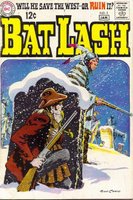
As far as I can see, the other publishers mostly went to 12 cents around the December 1961 issues, but you could see that a change was coming. In the March 1961 issues, DC began putting a box around the price, noting "Still 10c". That was dropped in favor of just "10c" with the August issues, and then in December we finally saw the new price-tag of four-color entertainment:


Archie, Marvel, and other publishers pretty much changed their prices at the same time. Not surprisingly, this resulted in a significant dip in sales. Of the 36 titles reporting sales in both 1961 and 1962, only seven reported increased sales in 1961, and three of those I'm a little suspicious of; the ACG titles Adventures into the Unknown and Forbidden Worlds apparently reported identical sales in both years while their Unknown Worlds book showed a 500-copies-per-issue increase.

What comics did the best? It looks like Archie comics were the most successful at retaining readers, with the flagship title only losing a couple hundred copies per issue and backup titles like Betty and Veronica, Jughead and Archie's Pals & Gals actually picking up a bit in sales. On the DC side, only Justice League of America increased sales, from 335,000 per issue to 340,000.

On average, all titles lost about 8.7% in sales, but the decline was far from uniform. The Superman line's losses ran from about 5% (Lois Lane) to 12.5% (World's Finest). Batman's books other than WF declined from 15.5% (Batman) to 18.5% (Detective). The Silver Age DC heroes fared better with Flash dipping 11.5% and Green Lantern losing 5.9% (from a smaller base).

What really got hammered? Three DC titles dipped by over 20%; Mystery in Space, House of Mystery and My Greatest Adventure. The only DC war title I can find sales for those years, Star Spangled War Stories, dipped by about 4.9%.

Some of these numbers make sense if you think about them. Wonder Woman didn't decline all that badly; down 6.5% in this market was practically up, so the two female-oriented books that we have stats for, Wonder Woman and Lois Lane, both did better than average. Girls that bought those comics didn't find their budget as pinched as might their brothers because they only had two heroines to choose from. It's not surprising that the war stories didn't do as badly as some of the others; they were probably purchased by older readers on average. Sugar and Spike, the only comic on the list designed for very young readers, suffered a pretty steep drop of 18%. Ditto with the monster-oriented issues like House of Mystery and My Greatest Adventure; the kiddies who read them were more price conscious.

What about Marvel Comics? Well, Fantastic Four didn't report sales for 1961 and 1962, but we can see that their two monster titles got crushed. Tales to Astonish slipped by 25% while Tales of Suspense declined by over 31%. So there is certainly ample evidence that Stan Lee's incredible Marvel Silver Age was half inspiration, and half desperation. In 1963 both those titles featured superhero stories and gained back all the readers they had lost in 1962.

Note: Most titles would gain sales over the next few years, although frustratingly, the main publisher (DC) did not report sales for 1963 and 1964, making it hard to gauge the recovery apart from other effects.

Monday, August 24, 2009

Blogroll Roundup

Mark Engblom has decided to call it quits for now over at Comic Coverage. I'm disappointed that so many great comics blogs have bit the dust in 2009: Dial B for Blog, the Fortress Keeper and now Comic Coverage. I'm biased, but in all honesty Mark's blog was better than Silver Age Comics.

Jacque Nodell reviews a Silver Age romance comic from Marvel: Patsy Walker #122. I love this observation:

Some may not consider Patsy Walker a romance comic, but it seems to have all the necessary requirements -- fashion, romance, and tears!


The third item being perhaps the most crucial ingredient.

Scipio is one of the best writers among comics bloggers, and this old post on the difference between Marvel and DC from 2005 is a prime example of his writing and thinking:

DC's message? You are responsible for protecting and improving yourself and society, so toughen up for that responsiblity.

Marvel's message? You better be tough, because you're going to have to suffer many things in this world that you're not responsible for and can't improve.

Both messages are completely true, of course, which is why each company does speak effectively to so many people. But, in my eyes, DC's message is designed to inspire and Marvel's message is designed to console.


Again with the Comics reviews a Mr Muscles issue from 1956.

Then it turns out that the wicked Zoo Keeper was just jealous of Mr. Muscles! He was all skinny, and Mr.Muscles was all strong, and it just made him want to turn tigers loose on one guy and try to shoot another guy!


Hey, it could happen to anybody.

Pappy's Golden Age Comics Blogazine covers the War Wheel, one of the wackier inventions of the Blackhawk villains. Anybody remember the Flying Tank?

Joe Bloke has a terrific vampire story from Creepy #14 by Archie Goodwin and Neal Adams. ExCellent twist ending!

Sunday, August 23, 2009

Batman and the Aliens: 1959

We continue our look at Batman and the aliens. In 1959, the World Series was played for the first time ever west of the Mississippi, with the LA Dodgers taking the crown. That same year, the Baltimore Colts won their second consecutive NFL title behind Johnny Unitas. The #1 tune that year was Mack the Knife by Bobby Darrin, and the top-rated TV show was Gunsmoke.

In Detective #263, Batman learns of an alien who crash-landed near a Mayan village some 100 months earlier:


The alien gave the tribe a few terrific alien tools including an anti-gravity sled, but crooks have stolen it from the tribe. Batman pledges to bring the alien tools back to the Mayans, but I should note that the ending of the story leaves that up in the air.

Status: True alien, appeared in the past and later left Earth. Green and human-sized. The concept of aliens leaving technology behind that is abused by local crooks is a very standard plot, so I'll give it only one Klaatu out of five.

Detective #270 features the Creature from Planet X:


Status: True alien, green and giant-sized. Two Klaatus awarded for this one; it's nice to see an alien who's enormous, but it's also the usual "convinced by crooks that acting crooked is normal on Earth," plot.

In Batman #124, the Seeds from Space appear, but once again the "alien" in the story is a robot:


Status: Not an alien, an alien robot.

In Batman #125, Batman becomes the King of the Planet Plaxius:


Status: Extraordinarily tricky. The planet is in another dimension, and the aliens do not appear alien; rather they just dress differently. Still, they do use space ships and so I'll call them true aliens, human-sized and caucasian in color. Four Klaatus for this unusual alien race.

In Batman #128; the dynamic duo get caught up in a dragnet for an interplanetary crook:

Status: True aliens; two different varieties; one orange-skinned and the other purple-red in color, with both human sized. Two Klaatus.

As you can see, the aliens were nowhere near as common in 1959 as they would become later:

Detective #263: True alien, green and human-sized
Detective #270: True alien, green and giant-sized
Batman #124: Not a true alien, robot
Batman #125: True aliens, caucasian and human-sized
Batman #128: True aliens (two separate species), orange and human-sized and purple-red and human sized.

Totals: Four stories involving true aliens, one story with an alien robot

1960:

Batman #130: Fake aliens
Batman #132: Fake aliens
Batman #136: True aliens, yellow and human-sized
Detective #277: True alien, orange and human-sized
Detective #279: Not a true alien, rather alien robot and alien beast
Detective #282: True aliens (two races): one orange and one green, both human-sized
Detective #283: True alien, white and human-sized

Overall for the year: Four stories with true aliens, one with an alien robot and an alien beast, and two stories with fake aliens.

1961:

Batman #137: True alien, white and human-sized and true aliens, yellow and human-sized (two separate stories).
Batman #140: Superman appearance; not counted in the tabulation, and true aliens, green and human-sized.
Batman #142: True alien, orange and human-sized.
Batman #143: Not a true alien, an alien beast.
Batman #144: True aliens, yellow and human-sized.
Detective #287: True aliens, one white and the other yellow, both slightly smaller than humans.
Detective #291: Not a true alien, an alien beast.
Detective #292: Superman cameo, not counted in the tabulation.
Detective #293: True aliens, pink and oversized.
Detective #295: True aliens, yellow and human-sized.

So in total we have 8 stories with true aliens (counting both stories in Batman #137), two stories with alien beasts and two Superman stories.

1962:

Detective #299: True aliens, several, green or white, human-sized.
Detective #303: Fake aliens.
Batman #148: True aliens, green and human-sized
Detective #305: True alien, orange and human-sized
Batman #152: Fake alien.

Three real aliens, two fake aliens.

1963-1964:

Batman #153: True aliens, green.
Batman #153: True aliens, multi-colored.
Batman #156: Fake alien (dream sequence)
Detective #320: No alien visible but implied.
Batman #160: Fake Alien

Two real aliens, two fake, one not seen.

Friday, August 21, 2009

Single Issue Review: House of Secrets #61


House of Secrets had long been the home base of Mark Merlin, an investigator of the supernatural; in fact the letters column was simply called Mark Merlin's Mailbox. The backup stories were the usual mixture of monsters and science fiction.

At the end of 1961, DC increased its cover prices from 10 cents to 12 cents. The result was pretty painful. House of Secrets lost 20% of its circulation. With the DC superhero books showing less dramatic declines, it's not surprising that the company started looking at putting superheroes in some of their other titles. My Greatest Adventure picked up the Doom Patrol in June 1963; House of Secrets added Eclipso with this issue (July-August 1963).

The timing was pretty good; much of North America experienced an eclipse of the sun on July 20, 1963, with parts of Maine and Canada having a total eclipse.

The Mark Merlin story leads off the issue. It picks up with the story from the last issue, where Merlin had been transformed into a cat:


As he and Elsa chat, a repairman indicates he's fixed the light in Merlin's bedroom. Later that night, someone steals the jawbone of a dinosaur; Merlin remembers while reading about the story in the papers the next day that the jawbone is an ingredient in a magical formula. The next night we see Merlin himself under the control of some mysterious voice:


The next day, Elsa and Mark learn that he is the one responsible for the recent crimes. Since somebody seems to be using him for their dirty work, Merlin decides to transfer himself into the cat, and follow his body when it goes out that night. Sure enough, it leads him to the castle of Dr 7, his new enemy.

When Merlin transforms back from the cat, he regains control of his body and the two sorcerers have something of a battle:


But Merlin's assistant gets taken over by Dr 7, and helps to trap her boss. Fortunately, Mark can still transfer to the cat, which reverses the spell:


Comments: Not a bad story, especially given the continuity from the prior issue. Merlin appears to be something of a Dr Strange-type without the cape; of course Merlin predates the Marvel character by several years.

The second feature is the Eclipso story. Dr Bruce Gordon is about to celebrate his greatest triumph: the dedication of an entire city run on solar power. But as he makes the last minute adjustments, an eclipse far away causes bizarre changes:


His evil self unleashed, Bruce changes into a bizarre costume and reveals knowledge that Gordon himself did not know. He devastates the Solar City:


His mentor (and father of his girlfriend), Professor Bennett discovers that Eclipso is secretly Bruce Gordon, when he changes back into his normal self. When they try to figure out where Eclipso came from, Bruce tells a rather silly story about some volcano god from South America who tried to kill him and failed, but cut him with a black diamond. No, I am not kidding:


So now Bruce and Professor Bennett have to find some way to prevent him from wreaking havoc again. They get the smart idea of locking him in a wind tunnel from which he can't escape during the next eclipse, but:


Fortunately Bruce has planned ahead to prevent Eclipso from making good on his escape:


Comments: Obviously a swipe of the Incredible Hulk/Bruce Banner bit, although making the alter-ego a villain rather than a misunderstood brute is a pretty interesting twist. Plus it's drawn by Lee Elias, a long-time favorite of mine. Eclipso was not destined for glory, but the origin story mostly works.

Thursday, August 20, 2009

Sprang Tributes?

My buddy Snard pointed out one in the chatroom the other day, from Detective #441:

This comes after the credit in Batman #238, so it's pretty obviously a recognition of Dick Sprang, the longtime (1943-1963) artist on Batman.

But then what do we make of this panel from Marvel, circa 1969:

Either of these would be early easter eggs, certainly. One is completely explicable; the other is completely out of the clear blue sky.

So I'm going to assume that the name Dick Sprang was well-known to comics aficionados before his first original credit, and that this actually, and surprisingly to me, is his first official Easter Egg Credit. I was blown away by the Detective #441 Easter Egg, and then I happened to be reading the Iron Man story for yesterday's post and blinked when I saw the sound effect there.

Update: I just realized the common element that seals the deal. Guess who wrote both stories? Archie Goodwin. So there you go; the first Dick Sprang tribute comes in Iron Man #14, written by Archie Goodwin, and the second in Detective #441, written by Archie Goodwin.

Wednesday, August 19, 2009

Iron Man Run, Part 12

We pick up with Iron Man #12, where we finally learn Vincent Sandhurst's secret. He had clashed with his brother, an inventive genius, and a resulting accident had effectively made Boris Sandhurst an invalid. Wracked with guilt, Vincent had embezzled significant sums from Janice Cord and her father, in order to help his brother with his experiments. Boris has discovered a way to harness the power of other people to overcome his body's limitations, and is now prepared to break loose.

Meanwhile, Iron Man has quickly gotten control of his Tony Stark robot and convinces the ambulance drivers that he doesn't need to go to the hospital. He decides to retire the robot forever as too risky. He's still planning on buying out Janice Cord's factories, although he senses that Sandhurst is just a little too eager.

However, Vincent has disappeared and Janice and Tony visit his hometown. There, they learn that everybody has been taken control of via a metal disk on their foreheads. The Controller (Boris Sandhurst) attacks and takes control of Janice. Iron Man fights back, but eventually he too is controlled by the metal disk:

In the next issue, the Controller decides to take Manhattan. He commandeers a train, and loads the Absorbatron (by which he harnesses the power of other people) onto it. Will he get to NYC and gain the power of millions?

There is a long battle between Iron Man and the Controller, but in the end, the Big Apple is in sight. Fortunately, during the battle Jasper Sitwell did what was needed:

But afterwards Tony is conflicted about Janice. Can he continue to romance her, knowing that at some point he might have to make a tough decision to save her or to save a city like New York?

He goes off to the Caribbean, to investigate an attack on one of his plants there. He discovers an opponent to his employing the locals, a wheelchair-bound man named Travis Hoyt:

It turns out that Janice is staying with Hoyt. But Hoyt has discovered a fountain of youth-type pool that has restored his ability to walk, and given him great powers, even if it has scarred him horribly.

Hoyt is angry because the pool is drying up due to development on the island. He intends to bathe Janice in the waters, so she will be like him. But Iron Man comes along in time to save the day and Hoyt dies as the pool is sucked into the ground.
In Iron Man #15, we learn that the Unicorn had indeed survived diving off the cliff back in IM #4, and that he has been nursed back to health by the Fantastic Four's old enemy, the Red Ghost. Typical Marvel villain team-up; both of them spend the time insulting each other:

But as the Red Ghost has a formula that will help to keep the Unicorn alive, they reach an uneasy truce. The Ghost wants him to steal another one of Tony's inventions, which will bring about the battle the Unicorn desires with Iron Man.
Meanwhile, Janice Cord has decided after consulting with Tony to reopen her father's plants. They will be in friendly competition with each other. Archie Goodwin (the writer) makes sure to introduce the newest plot development at this point:

It's not hard to guess that Niven will turn out to be a bad apple.

The next day, as Stark and Sitwell are jetting to a test site with Tony's newest invention, the Unicorn strikes. Sitwell pushes Stark out of the plane, but before Iron Man can save the SHIELD agent, the plane crashes. Iron Man battles the Unicorn, but in the meantime, the Red Ghost has used the new invention to give him enhanced powers. Oh, and he was lying about the injections saving the Unicorn's life:

The Red Ghost blows up his own laboratory, trapping Iron Man and the Unicorn inside. As it happens, neither is able to escape on his own, so they have to combine forces:

The Red Ghost has attacked one of SHIELD's laboratories in the African jungle, using his pet apes (who have also gained new powers. Somehow Iron Man and the Unicorn track him down, but the Unicorn behaves in typical Marvel villain fashion, failing to plan. As it happens the apes make fairly easy work of the new allies, and it looks like the Red Ghost will surely succeed. But one of his apes has gained intelligence and rebels. The Unicorn grabs the Ghost and escapes, vowing to make the Soviet scientist find a real cure for his death curse.

Comments: A so-so run of stories; I liked the two Controller issues, but was bored by the last three issues. Archie Goodwin seems to be having a tough time figuring out what to do about Janice Cord; she's obviously well-suited as a mate for Tony and yet he keeps thinking about the risk that she's in with him. And virtually every storyline starts out with an attack on one of Stark's factories and/or one of his new inventions. Indeed, that's one of the reasons I liked the Controller issues, because Stark had almost nothing to do with the plot.

Tuesday, August 18, 2009

Batman And the Aliens: 1960

Continuing our backwards trek through the Schiff era, we come to 1960. The Pittsburgh Pirates stunned the baseball world by defeating the Yankees in Game 7 of the World Series, behind Bill Mazeroski's walk-off home run in the bottom of the ninth inning. The Green Bay Packers lost their only championship of the Vince Lombardi era to the Philadelphia Eagles and Norm Van Brocklin. Cathy's Clown by the Everly Brothers was the #1 pop music hit, while Gunsmoke was the top-rated TV show.

In Batman #130, Batman and Robin faced The Hand From Nowhere, which was controlled by two apparent aliens:


Status: Fake aliens; in fact it's a criminal gang led by longtime Superman foe, Luthor.

In Batman #132, the dynamic duo meet a man from Mars:


Status: Another fake alien; Karik was actually an actor playing a part who suffered the dreaded "blow to the head" that made him think he was really from Mars.

In Batman #136, Batman and Robin repel an Vordian invasion force:


Status: True aliens, human sized and yellow in color. Two Klaatus out of a possible five.

In Detective #277, an alien ship crash-lands on Earth:

Status: True alien, human-sized and orange in color. His crash landing frees the Jigsaw Puzzle Creature. Three Klaatus out of five.

Detective #279 features these:

Status: A very tough call. The robot-looking thing is a robot and the orange and pink creature is a beast, with only rudimentary intelligence. In addition, they are from another dimension, which also makes things trickier as I've not included Bat-Mite, for example, as an alien in my schema. I'm going to rule against the true alien nature here as even a robot has no real intelligence.

In Detective #282, we first meet Batman's Interplanetary Rival, Tal-Dar, chief of the Interplanetary Space Police:


Status: True alien, orange and human-sized. As the only alien who appeared in two separate Batman stories (other than Superman of course), Tal-Dar, who later popped up in Batman #142 gets the full five Klaatus.

We also meet another alien race in the story:


Status: True aliens, human-sized and green. Two Klaatus.

In Detective #283, a crooked scientist summons an alien to Earth with a machine:


Status: True alien, white and human-sized. Three Klaatus for DC daring to reuse the Martian Manhunter's origin in a Batman story in Detective.

It certainly looks like 1960 was another banner year for aliens in the Batman canon. Summary for 1960:

Batman #130: Fake aliens
Batman #132: Fake aliens
Batman #136: True aliens, yellow and human-sized
Detective #277: True alien, orange and human-sized
Detective #279: Not a true alien, rather alien robot and alien beast
Detective #282: True aliens (two races): one orange and one green, both human-sized
Detective #283: True alien, white and human-sized

Overall for the year: Four stories with true aliens, one with an alien robot and an alien beast, and two stories with fake aliens.

1961:

Batman #137: True alien, white and human-sized and true aliens, yellow and human-sized (two separate stories).
Batman #140: Superman appearance; not counted in the tabulation, and true aliens, green and human-sized.
Batman #142: True alien, orange and human-sized.
Batman #143: Not a true alien, an alien beast.
Batman #144: True aliens, yellow and human-sized.
Detective #287: True aliens, one white and the other yellow, both slightly smaller than humans.
Detective #291: Not a true alien, an alien beast.
Detective #292: Superman cameo, not counted in the tabulation.
Detective #293: True aliens, pink and oversized.
Detective #295: True aliens, yellow and human-sized.

So in total we have 8 stories with true aliens (counting both stories in Batman #137), two stories with alien beasts and two Superman stories.

1962:

Detective #299: True aliens, several, green or white, human-sized.
Detective #303: Fake aliens.
Batman #148: True aliens, green and human-sized
Detective #305: True alien, orange and human-sized
Batman #152: Fake alien.

Three real aliens, two fake aliens.

1963-1964:

Batman #153: True aliens, green.
Batman #153: True aliens, multi-colored.
Batman #156: Fake alien (dream sequence)
Detective #320: No alien visible but implied.
Batman #160: Fake Alien

Two real aliens, two fake, one not seen.

I try to mention when I remember it, that these types of posts are very much inspired by H at the Comic Treadmill, whose terrific prop stars series are highly recommended.

Monday, August 17, 2009

Quick Thinking, Boy Blunder!

Heheh, I was looking for more Batman and aliens stuff when I stumbled across this rather amusing mistake in Detective #271. In the story, Batman discovers he's got a new ally in the war against crime:

The Crimson Knight is chosen along with Batman and Robin to guard the Liberty Train, a rolling museum displaying priceless historical documents:

But it turns out that the Crimson Knight's crimefighting was a guise to get him an opportunity to loot the Liberty Train.

When the dynamic duo burst in on the Crimson Knight, note that he has several of those priceless documents in his hand. And what does Robin do?

Which causes this:

Yes, nice going, Robin! True, it's a bit of a shame that the Declaration of Independence and a couple other priceless documents got a little wet there, but hey, at least you busted that phony Crimson Knight.

Incidentally, this story also features Batman's electronic crime file:

The electronic crime file was the subject of a recent post over at I Believe in Bat-Mite. I talked about that same story a long time ago in my post on Batman 1956.

Sunday, August 16, 2009

Golden Age In the Silver Age: Showcase #55


The DC Silver Age was marked by the emergence of new characters based on old characters, but with significant changes. Jay Garrick was no longer the Flash, Green Lantern's power ring didn't work against yellow instead of wood, Hawkman was a lawman from the stars, and the Atom could actually change his size.

This must have been somewhat frustrating for fans of the Golden Age. True, there started the Silver/Golden Age crossovers between the two Flashes and the two GLs, and the Justice League/Justice Society annual stories provided some real Golden Age action. But Julius Schwartz had to this point avoided bringing back the GA characters in a separate book, solely dedicated to them.

This issue changed all that. Schwartz enlisted the talents of Gardner Fox and Murphy Anderson for this issue, featuring the return of one of the more famous Golden Age villains, Solomon Grundy.

In the story we learn that Solomon Grundy had more or less spontaneously arisen from decaying vegetation in a swamp, that he'd led a criminal gang on a rampage across the country, but that the Golden Age Green Lantern (Alan Scott) had sent him away in a green bubble to outer space. Now he has returned. Can Hourman and Doctor Fate stop him on his mission of revenge against GL?

Doctor Fate's crystal ball alerts him to the presence of Grundy on Earth. Hourman (Rex Tyler) also finds out:


Why do I get the feeling that Rex's chemical company became a Superfund cleanup site in the 1980s?

Tyler swallows his Miraclo pill and becomes super-powered for one hour. Thus begins one of the annoying parts of the story; every time there's a panel featuring Hourman, we also have to have a clock telling us the current time. Not the information that's useful (like how many minutes are left on Hourman's hour of power), but the present time.

Obviously part of bringing back Solomon Grundy was to appeal to Hulk fans. But I confess, the "Hulk smash!" bit was a little tame compared to this:


As you can see, Dr Fate arrives as well, and the three of them battle it out for a bit. But Grundy wins and so he goes into Gotham City in search of Green Lantern. GL shows up and Solly kayos him with a bunch of wood. And when Doctor Fate and Hourman arrive, they turn against each other:


But unlike a Marvel slugfest of the period, where we'd see the skills of one hero against the talents of another, this is just a brief diversion. It turns out that they knock each other out, and they realize that there's some odd interference between Hourman's Miraclo pills and Dr Fate's magic.

Meanwhile, Grundy has encountered his old gang, giving him the chance to explain how he got free of the alien world where Green Lantern had left him. A comet happened by and swept his green cage into space with him in it. By holding the sides, he was able to guide the bubble to Earth, where it smashed.

Grundy helps out his old gang by smashing a few stores open so they can rob them, then continues back to the radioactive swamp with GL. The radiation works a change on Alan Scott:


But Dr Fate is able to change him back and in the end, he and Green Lantern team up to seal Solomon Grundy in a part-power ring, part-magic bubble that they place in orbit around the Earth.

Comments: This story has all the elements of a classic: great artist, talented writer, teamup of heroes and a classic villain. And yet it falls flat. Anderson appears to be mimicking the Golden Age style (especially on the inks), but the effect is to make it look old-fashioned. The story is dull as dishwater, and the conflict between Dr Fate's magic and the Miraclo pills appears to be padding to make the story last a little longer.

Update: For a different take on Showcase #55, check out M. Hamilton's post at the Comics Bin.

Saturday, August 15, 2009

Tracers: Batman and Superman in the JLA

Julius Schwartz tells a famous anecdote in Man of Two Worlds, his autobiography, about how in the early days of the Justice League of America, Mort Weisinger and Jack Schiff refused him permission to use Superman and Batman in their stories, and especially on the covers. They were reportedly worried about overexposure of their characters. As Schwartz tells it, he was getting congratulated by Jack Liebowitz on the success of the JLA when Liebowitz, DC's publisher, asked him why he didn't use Superman or Batman in his stories. When Schwartz explained, Liebowitz exploded with anger that Weisinger and Schiff didn't own the characters, DC did, and that he now had permission to incorporate them into the JLA stories, which Julie did with alacrity.

The first part of the story certainly fits; although Batman and Superman had cameos at the end of the JLA intro story in Brave & Bold #28, they were not featured on the cover, and indeed did not appear on a JLA cover until #10:


Okay, so here we go; JLA #10, Mr Liebowitz gives him the nod, and Schwartz responds with a cover featuring Batman and Superman, end of story, beginning of Dark Knight and Son of Krypton in JLA, right?

Uh, no. Superman and Batman next appeared on the cover of JLA #19, and there, they were used as bookends for the rest of the League:


After that, Batman and Superman popped up on #21, but neither of them appeared on the cover of #20, #22, #23, or #24. At that point the series did change quite substantially, featuring Batman and Superman very prominently on almost every cover.

So it would appear that Schwartz got his permission from Liebowitz around the time that JLA #25 was being planned; prior to that Batman and Superman had appeared on only three covers; after that, they were generally featured prominently on virtually every cover, and of course around the same time (as JLA #27 was published) Schwartz took over the editorship of Batman and Detective Comics.

Friday, August 14, 2009

Did You Ever Wonder?

Where the Betty/Veronica rivalry for Archie's affections started? Bill Jourdain has the 411.

Why Rita (Elasti-Girl from the Doom Patrol) never went back to Hollywood? Johnny Bacardi stirs up the answer.

What are the five greatest superhero/supervillain vehicles? Mark Engblom kicks the tires and slams the doors. Somehow Killer Moth's Mothmobile missed the cut.

Who the other Boy Wonders of 1940 were? J. L. Bell tracks down the Robin wannabes.

What the people killed by the Spectre during the notorious Michael Fleisher/Jim Aparo run in Adventure Comics said as they died? H at the Comic Treadmill has the final word on that topic.

Thursday, August 13, 2009

Somebody Didn't Get the Rule Book

Julius Schwartz, in his autobiography, Man of Two Worlds, laid down Rule #1 for being a successful editor in the Silver Age:

If you don't want to get in trouble:

1. Never call a character CLINT
2. Never use the verb FLICK
3. And always avoid using the contraction WHO'RE

A slipup in the lettering can end your career faster than Clint can flick his Bic.


From Little Dot, Dotland #40 (June 1969):


Definitely flirting with disaster.

Wednesday, August 12, 2009

Trivia Quiz #30 Answers

1. True or false: Ray Palmer is a professor at Ivy University.

False: Ray is a grad student and research scientist at Ivy U.

2. What retired professor at Ivy invented the Time Pool, by which the Atom travels into the past?

As first revealed in the Atom #3, Alpheus V. Hyatt invented the Time Pool.

3. At what high school did Ray Palmer deliver the commencement address?

Ray Palmer gave the commencement address at Happy Harbor High School, where JLA honorary member Snapper Carr was graduating.


4. Ivy Town had more than its share of criminals. Of the following, who was not a crook:

A. Bates, the caretaker.
B. Clinton, the watchmaker.
C. Phillips, the newspaper reporter.
D. Dudley, the horticultural expert.
E. Elkins, the photographer.

Dudley, the horticultural expert, was another retired professor at Ivy University and not a criminal.

5. What did Jean Loring's father do for a living?

Jean Loring's father was a professor and scientist with no specific details as to the field he was involved in when he was introduced in Showcase #36. Later, in the Atom #21, we learned that he was researching using gravity as an energy source for spaceships, so it appears that his specialty was physics.

Jim kicked major league butt on this question, getting all five correct and even adding some details on the inspiration for Alpheus V. Hyatt. Great job!